



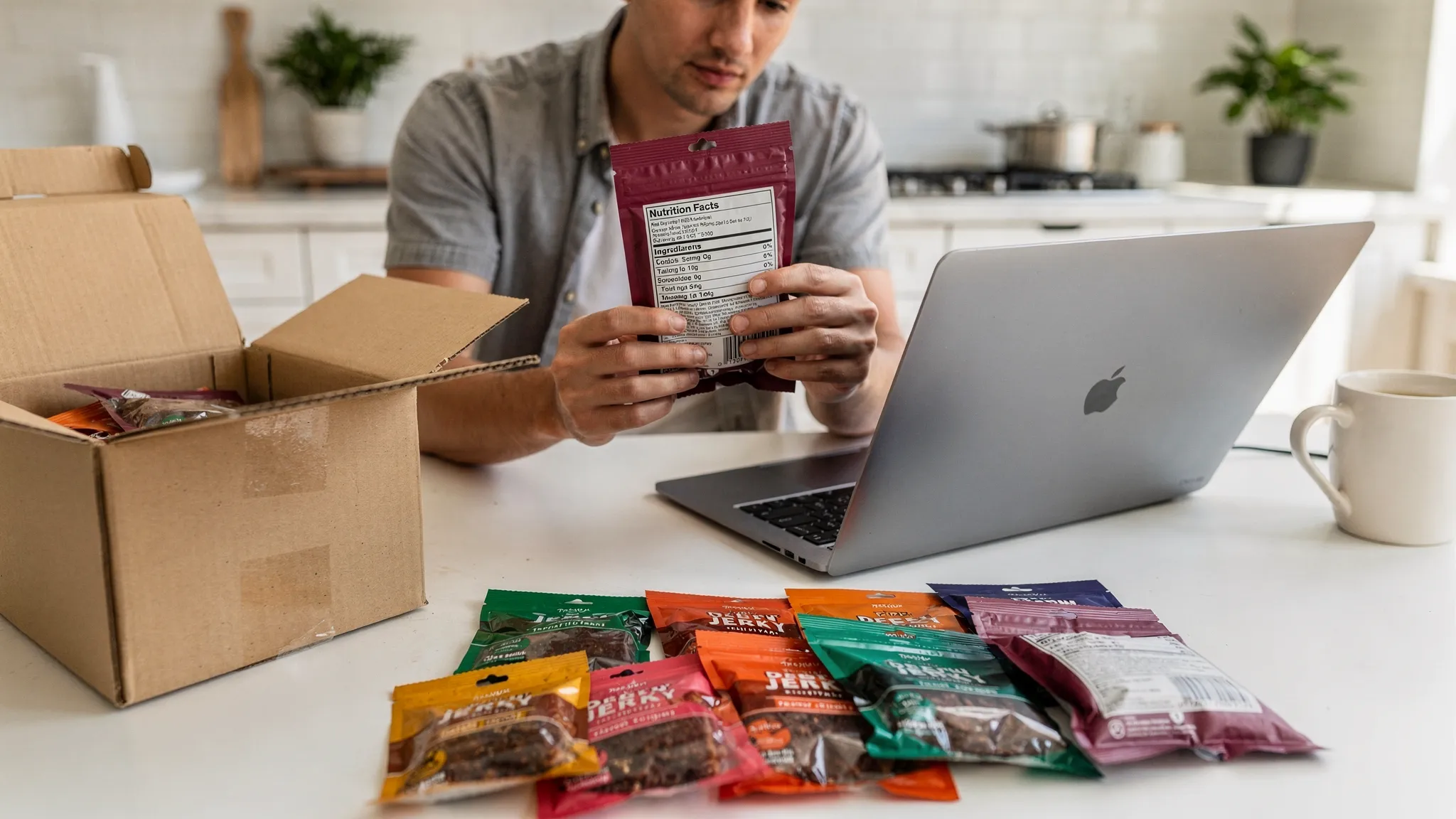
Buying jerky online is supposed to be simple. But once you leave the gas station aisle and start shopping from a true jerky store, you have way more choices, and more ways to get it wrong: mystery ingredients, misleading “keto” claims, stale inventory, shipping that turns a great bag into a sweaty mess, or “bulk deals” that are not actually a deal.
This guide gives you a practical way to judge any online jerky store quickly, so you can feel confident about taste, safety, and value before you click “checkout.”
1) Start with the two non-negotiables: safety and transparency
Jerky is shelf-stable because it’s controlled, processed, and packaged carefully, not because it’s magically immune to food safety issues. A trustworthy jerky store makes it easy to verify basics.
Look for clear manufacturing and inspection signals
You are not trying to become a food auditor, you are just trying to avoid sketchy operations.
- USDA inspection markers and facility information: For meat products, a reputable producer will typically reference USDA inspection and provide identifiable company information.
- Food safety handling and storage instructions: Legit product pages tell you how to store it after opening and whether refrigeration is recommended.
If you want a solid baseline on why jerky safety hinges on processing and handling, the USDA’s Food Safety and Inspection Service has consumer guidance on safe jerky practices and storage: USDA FSIS food safety resources.
Ingredient lists should be complete and readable
A good jerky store does not hide behind vague marketing.
Check that product pages show:
- Full ingredient list (not just “seasonings” with no detail)
- Allergen disclosures (soy, wheat, etc.) when relevant
- Nutrition Facts with a visible serving size
If ingredients or nutrition are missing, treat it as a red flag. Even if the jerky tastes great, it’s hard to buy confidently when the basics are not disclosed.
2) Learn to read product pages like a buyer, not a fan
Great branding can make mediocre jerky look elite. Your job is to interpret what the store is really selling.
Identify the jerky type and the expected texture
Online, texture surprises are the most common “regret” trigger.
Many stores sell multiple styles (sometimes without spelling it out clearly). As a shopper, you want to know whether you’re buying something tender and snackable or something “rip and chew.”
A quick way to decode texture from the page:
- Cut and slice clues: Whole-muscle slices tend to show grain and variation. Chopped and formed products are often more uniform.
- Moisture expectations: “Soft” and “tender” often means higher moisture (and sometimes a shorter best experience window after opening).
- Old-school cues: “Texas-style,” “chunk,” or “rip and chew” typically implies firmer bite.
If you want a deeper texture breakdown before you buy, this guide is useful: Beef Jerky Chew: Tender, Tough, or Rip n Chew?.
Watch for “health halo” language that doesn’t match the label
Terms like “all natural,” “keto,” “high protein,” and “no nitrates added” can be meaningful, but they can also be used loosely.
Instead of trusting the headline, verify on the label:
- Added sugar (or lack of it)
- Sodium per serving (and serving size)
- Protein per ounce (normalize per ounce to compare brands)
If you’re specifically shopping for better-for-you options, this is a strong companion read: Healthy Beef Jerky: Labels to Trust, Traps to Avoid.
3) Freshness online is real, but you have to shop for it
“Fresh jerky” online does not mean it was made yesterday. It means you receive product that tastes right, chews right, and arrives with packaging that has not been compromised.
Good stores make freshness easy to protect
Look for:
- Sturdy packaging (intact seals, no pinholes, no puffed bags)
- Reasonable shipping policies and communication (tracking, support if a package is delayed)
- Clear guidance for storage after opening
When your order arrives, inspect it like you would any packaged food. If something looks off, take photos immediately and contact support while you still have the shipping box.
For a full “arrival inspection” and storage playbook, see: Beef Jerky Online: How to Buy Fresh Every Time.

4) Variety matters, but curated variety matters more
A big menu is only helpful if it helps you choose the right jerky for your taste, heat tolerance, and dietary needs.
Look for clear filters and collections
A strong jerky store experience often includes:
- Flavor categories (classic, pepper, teriyaki-style, smoky, sweet and spicy)
- Heat level guidance (mild to extreme)
- Texture guidance (tender vs rip-and-chew)
- Dietary-friendly options (for example, sugar-free or gluten-free options)
If you like spicy jerky, don’t rely on “hot” vs “mild” product names alone. Ingredient placement and pepper type can tell you more than the label headline. This breakdown helps you predict what “hot” will feel like: Spicy Beef Jerky: Heat Levels Explained.
The best first purchase is rarely “one giant bag”
If you are new to a store, your goal is to reduce downside risk.
Good stores make it easy to try a range without overcommitting, for example:
- Build-your-own boxes (mix flavors and formats)
- Starter kits or curated samplers
- Bundles designed around a theme (classic flavors, spicy lineup, diet-friendly)
On Bulk Beef Jerky, shoppers can use a build your own snack box approach and also find bundle deals (the site mentions savings up to 20%), which is a smart way to learn your preferences before going all-in on bulk.
5) Value is more than “price per bag”: calculate what you actually get
Online jerky pricing can be misleading because bag sizes, moisture, and serving sizes vary.
Compare apples to apples with two quick metrics
- Landed cost per ounce: (item price + shipping) ÷ ounces
- Protein per dollar: total protein grams ÷ total dollars
If a store offers free shipping over a threshold, that can dramatically change the landed cost. Bulk Beef Jerky, for example, notes free shipping over $100, which can make a larger mixed order more cost-effective than several small ones.
Know when “bulk” is actually smart
Bulk makes the most sense when:
- You already know at least one “safe flavor” you will happily eat repeatedly
- You have a plan to store it well after opening
- You are buying for a group (workplace, team travel, events)
If you want a practical system to stock up without waste, this guide is built for that: Bulk Snacks: How to Stock Up Without Waste.
6) Use this online jerky store scorecard (fast, objective, repeatable)
When you are deciding between two stores, a simple rubric prevents impulse buying.
| What to check in a jerky store | Why it matters | How to verify quickly online |
|---|---|---|
| Complete ingredients + Nutrition Facts | Avoid surprises (sugar, allergens, sodium) | Product page shows full panel images or text |
| Clear texture/style descriptions | Prevent “too tough” or “too soft” regret | Words like tender, sliced, rip-and-chew, Texas-style, chunk |
| Safety and handling info | Reduces risk, improves storage outcomes | Storage guidance, credible company info, support contact |
| Shipping and support clarity | Fixes issues fast if delivery goes wrong | Tracking, customer service options, policy pages |
| Real variety (formats and flavors) | Keeps repeat buying from getting boring | Jerky plus sticks/snacks, heat range, classic lineup |
| Diet-friendly options (when needed) | Makes it easier to stay consistent | Dedicated sugar-free or gluten-free options clearly labeled |
| Bulk economics | You want predictable value, not “fake deals” | Bundle discounts, free-shipping threshold, transparent weights |
| Reviews and reputation signals | Social proof, but also pattern detection | Look for specific notes on freshness, texture, customer service |
Treat any single weakness as “investigate,” not “reject.” But if a store is weak on multiple fundamentals (missing labels, unclear policies, vague product info), it’s usually not worth the gamble.
7) The “right” jerky store depends on your use case
Two people can buy from the same store and have very different definitions of success. Match the store’s strengths to your situation.
If you snack for performance (gym, long shifts, travel)
Prioritize:
- Consistent flavor and texture (easy to reorder)
- Diet-friendly options if you track macros (for example, sugar-free)
- Bulk formats and bundles that reduce restock friction
This is a solid, practical guide if sugar is your main constraint: Sugar Free Beef Jerky: Best Options and Tips.
If you buy for groups or offices
Prioritize:
- Broad crowd-pleasers (classic, teriyaki-style, pepper)
- A heat “ladder” (mild, medium, hot) instead of only extremes
- Easy mix-and-match ordering so everyone gets something they like
If you want to build a safe “variety pack” without overthinking it, this flavor popularity guide can help you balance the box: Beef Jerky Flavors Ranked by Crowd Favorites.
If you care most about old-school chew and traditional styles
Prioritize:
- Stores that explain style and process, not just flavor names
- Products described as Texas-style, traditional, or rip-and-chew
Bulk Beef Jerky calls out old-school Texas-style jerky and also offers all-natural brisket jerky, which are the kinds of explicit product cues that help traditional-jerky fans shop with confidence.
8) A simple way to place your first “no-regrets” order
If you are trying a jerky store for the first time, you can make a smart first purchase without turning it into a spreadsheet.
- Choose one safe flavor you already like (pepper, original, teriyaki-style).
- Add one “stretch” pick (spicy, smoky, garlic-forward).
- Add one diet-friendly option if needed (sugar-free or gluten-free).
- If the store offers it, use a build-your-own box or bundle so you can sample variety.
- If you are near a free-shipping threshold, compare the total landed cost per ounce with and without the extra bag.
If you want a second opinion on what quality signals should look like across brands and styles, this checklist is worth keeping bookmarked: What Makes Good Beef Jerky? A Quick Checklist.
Where Bulk Beef Jerky fits if you are evaluating stores
If your ideal online jerky store is one that supports both sampling and stocking up, Bulk Beef Jerky is structured around that shopping style:
- Build your own snack box for variety
- Bundle deals (up to 20% off) for predictable savings
- Free shipping over $100 for better landed cost on larger orders
- Options that many shoppers look for online, including sugar-free jerky and gluten-free snacks
- Bulk purchasing and wholesale pathways if you are buying for teams, shops, or repeat needs
You can browse the full store here: Bulk Beef Jerky.
The bottom line: the best jerky store is the one that makes it easy to verify what you’re buying, delivers it in great condition, and gives you enough variety and value to reorder confidently.