



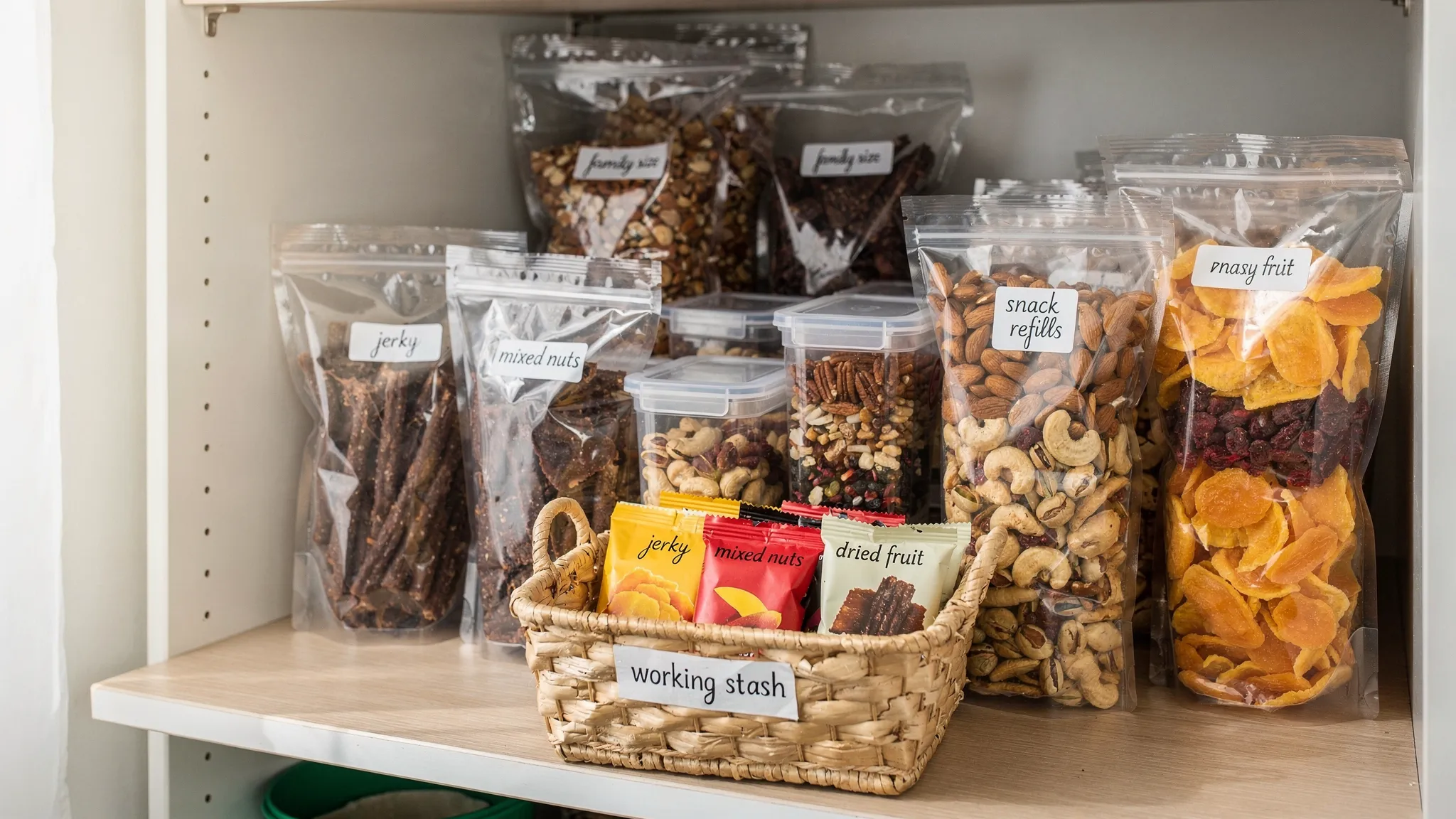
Buying bulk snacks feels like the ultimate life upgrade: fewer shopping trips, better value, and a stash that is always ready for workouts, road trips, or late-night cravings. The downside is just as real, if you stock up without a plan you can end up with stale bags, flavor fatigue, and a “pantry graveyard” of half-eaten snacks.
This guide walks you through a simple, low-waste system for stocking up, so your bulk buys actually get eaten (and still taste great).
Why bulk snack stock-ups go to waste
Most snack waste is not caused by buying “too much,” it is caused by buying too much of the wrong thing for your routine.
Here are the most common failure points:
- No usage plan: the snacks do not match how you actually snack (after the gym, at work, during travel).
- Storing everything in one giant bag: repeated opening introduces air and moisture, which accelerates staling.
- Variety fatigue: you loved it for three days, then avoided it for three weeks.
- Out of sight, out of mind: bulk purchases get pushed to the back, then discovered after the best-by date.
The fix is a small set of habits: choose the right snack types for bulk, portion early, store correctly, and rotate.
Step 1: Choose the right snacks to buy in bulk
Not every snack is a “bulk snack.” The best candidates are items that are:
- Shelf-stable (or freezer-friendly)
- Easy to portion
- Versatile enough that you will actually keep reaching for them
Protein-forward, shelf-stable snacks like beef jerky are popular for bulk buying because they are compact, travel-friendly, and easy to ration into daily portions.
Here is a practical way to think about bulk snack categories.
| Bulk snack type | Why it works for bulk | Biggest “waste risk” | How to prevent waste |
|---|---|---|---|
| Jerky (variety packs or bulk bags) | Shelf-stable, high-protein, easy to grab | Flavor fatigue, drying out after opening | Buy multiple flavors, keep a small “working stash,” reseal quickly |
| Snack sticks | Convenient portions, good for lunch kits | Texture changes if stored poorly | Store as directed on the package, avoid heat exposure |
| Nuts | Calorie-dense, versatile, long-lasting if stored well | Going rancid over time (oils oxidize) | Use airtight containers, keep cool and dark, consider freezing extra |
| Dried fruit | Naturally portable, pairs well with nuts and jerky | Clumping, hardening, or drying out | Airtight storage, portion into small bags |
| Chips/crackers | Crowd-pleasers for events | Stale quickly after opening | Only bulk-buy if you can portion into sealed containers fast |
If you are unsure what you will finish, start small with a sampler or starter kit before committing to larger bulk sizes.
Step 2: Do a “days of supply” check before you add to cart
A low-waste bulk buy starts with one question:
How many days will this last in my real life?
Use this quick formula:
Days of supply = Total servings you are buying ÷ Servings you actually eat per day (or per week)
Example:
If you snack on jerky 4 times per week, and your bulk order equals 24 snack portions, you have about 6 weeks of supply.
That is usually a comfortable window for most people because it is long enough to benefit from buying bulk, but not so long that you forget what is in the pantry.
A helpful rule of thumb:
- 2 to 6 weeks of supply is a sweet spot for most bulk snacks.
- If you are going beyond that, you need stronger storage and rotation habits (more on that below).
Step 3: Portion your bulk snacks the day they arrive
The fastest way to ruin a bulk purchase is treating it like a single, giant snack bag.
Instead, set up a two-tier system:
- Working stash (easy access): what you will eat in the next 7 to 14 days.
- Backstock (protected): everything else stays sealed and stored.
This reduces repeated exposure to air and humidity, and it makes it easier to track what you are actually consuming.
Practical portioning ideas that do not require fancy gear:
- Use small reusable containers or resealable bags for 1 to 2 servings.
- Keep a “grab basket” near the front of the pantry for your weekly snacks.
- Label portions with a simple marker (flavor + month).
If you want to go further, you can use a vacuum sealer for backstock, but you can still get most of the benefit from basic airtight storage.

Step 4: Store bulk snacks like you store quality ingredients
The enemies of snack quality are usually the same four things: heat, light, oxygen, and moisture.
General storage best practices (that work for most shelf-stable bulk snacks):
- Keep snacks cool and consistent: avoid storing bulk snacks above ovens, in garages, or in cars.
- Use airtight containers once opened: especially for nuts, dried fruit, and anything crunchy.
- Protect from light: a dark pantry beats a sunny countertop.
- Avoid humidity: reseal quickly after opening and keep containers dry.
For food-safety and quality timelines, it also helps to use a trusted reference. The USDA’s FoodKeeper resource is a good starting point for general storage guidance.
Important note: different products have different storage needs, so always follow the package instructions first.
Step 5: Use a simple FIFO rotation system (first in, first out)
FIFO is the easiest anti-waste habit you can adopt.
Here is how to do it without turning your pantry into a spreadsheet:
- Put new arrivals behind older items.
- Keep best-by dates facing forward when possible.
- Once a week, do a 30-second scan and move any “next up” items into your working stash.
A simple way to make FIFO automatic is to create one dedicated bin labeled “EAT NEXT.” When you notice something nearing its date, it goes into that bin.

Step 6: Beat flavor fatigue with planned variety (not random variety)
One of the biggest hidden causes of bulk snack waste is “I got bored.” The solution is not buying fewer snacks, it is buying the right mix.
Try one of these variety strategies:
Build a “flavor triangle”
Instead of buying three bags of one flavor, stock a triangle:
- Savory/classic (daily driver)
- Sweet or teriyaki-style (craving crusher)
- Spicy or bold (high-interest snack)
That mix keeps your palate engaged and helps you finish everything.
Match snacks to use cases
Assign snacks to moments:
- Post-workout: protein-forward option you genuinely like
- Desk snack: low-mess, easy portion
- Travel: durable, heat-tolerant packaging and flavors you do not get tired of
If you like customizing your mix, a build-your-own box can make this easier because you can balance flavors and formats instead of committing to one huge bulk item. (Bulk offers a “build your box” option on pages like their bundle builder feature.)
Step 7: Plan bulk snack stock-ups around real scenarios
Bulk buying is most efficient when it supports predictable needs.
1) The weekly routine (work, school, gym)
Aim for 2 to 6 weeks of supply. Prioritize snacks that portion cleanly and feel “repeatable.” Jerky and snack sticks often work well here because they are easy to grab and do not require prep.
2) The travel stash (road trips, flights, hotels)
Create a dedicated travel bin and refill it from your backstock. The win is that you stop buying overpriced snacks on the road and you stop forgetting what you already own.
3) The group/event stash (watch parties, hunting camp, family weekends)
This is where bulk really shines, because waste drops when you have more mouths to feed. For groups, choose a broader flavor spread and multiple textures.
If you want ideas for picking crowd-pleasing flavors, this kind of ranking-style guide can help you avoid “risky” choices for a group: Beef Jerky Flavors Ranked by Crowd Favorites.
When bulk snacks are not the right move
Bulk is not always the best option. Consider buying smaller quantities if:
- You are trying a brand or flavor for the first time and do not know your preference.
- You only snack occasionally (a bulk buy may sit too long).
- You are buying something that stales quickly after opening and you do not have a portioning habit.
A smart compromise is starting with smaller variety buys, then “bulk up” the flavors and formats you finish fastest.
If you want a framework for evaluating quality and fit before committing, Bulk has a strong guide here: Beef Jerky Brands: How to Compare Like a Pro.
A low-waste bulk snack checklist (save this)
If you do nothing else, do these five things:
- Buy a mix you will actually eat (not just what sounds good once).
- Check your “days of supply” before purchasing.
- Portion into a 7 to 14 day working stash.
- Store backstock airtight, cool, and dark.
- Rotate weekly using FIFO.
That is the difference between a stocked pantry and a pantry full of regrets.
Frequently Asked Questions
How do I buy bulk snacks without them going stale? Portion immediately into a small working stash and keep the rest sealed in airtight containers (or unopened packaging) in a cool, dark place. Open and expose only what you will eat soon.
What are the best bulk snacks for people who work out? Shelf-stable, protein-forward snacks are common picks because they are convenient and easy to portion. Many people use jerky or snack sticks as part of a higher-protein routine.
Are bulk snacks cheaper, or do I just end up wasting more? Bulk snacks can be cheaper per serving, but only if you finish them. The best way to ensure value is calculating “days of supply,” portioning early, and rotating inventory.
Should I refrigerate or freeze bulk snacks? It depends on the product. Many snacks are pantry-stable when unopened, but freezing can help extend quality for some items (especially nuts) if you are buying a long supply. Always follow the package storage instructions first.
How do I avoid flavor fatigue when buying bulk? Buy planned variety, not random variety. Use a mix (savory, sweet, spicy) and assign snacks to use cases (desk, gym, travel) so everything has a purpose.
What is the easiest way to rotate bulk snacks? Use FIFO: place new items behind old ones and keep a small “EAT NEXT” bin for anything nearing its date. Do a quick weekly scan.
Stock up on bulk snacks that are built to perform
If your goal is a pantry that supports training days, long drives, and busy weeks, Bulk’s lineup is designed for exactly that, premium meat snacks (jerky, sticks, and more) with options like all-natural brisket jerky, old-school Texas-style jerky, plus gluten-free and sugar-free choices.
You can keep waste low by building a mix you will actually finish:
- Try the Build Your Own Snack Box option (and save with larger bundles) via Bulk’s site: bulkbeefjerky.com
- Look for bundle deals (up to 20% off on select builds) on pages like the bundle builder
- If you are stocking up big, remember Bulk offers free shipping over $100
Choose your flavors, portion your stash, and make bulk buying feel as clean and efficient as it should be.