



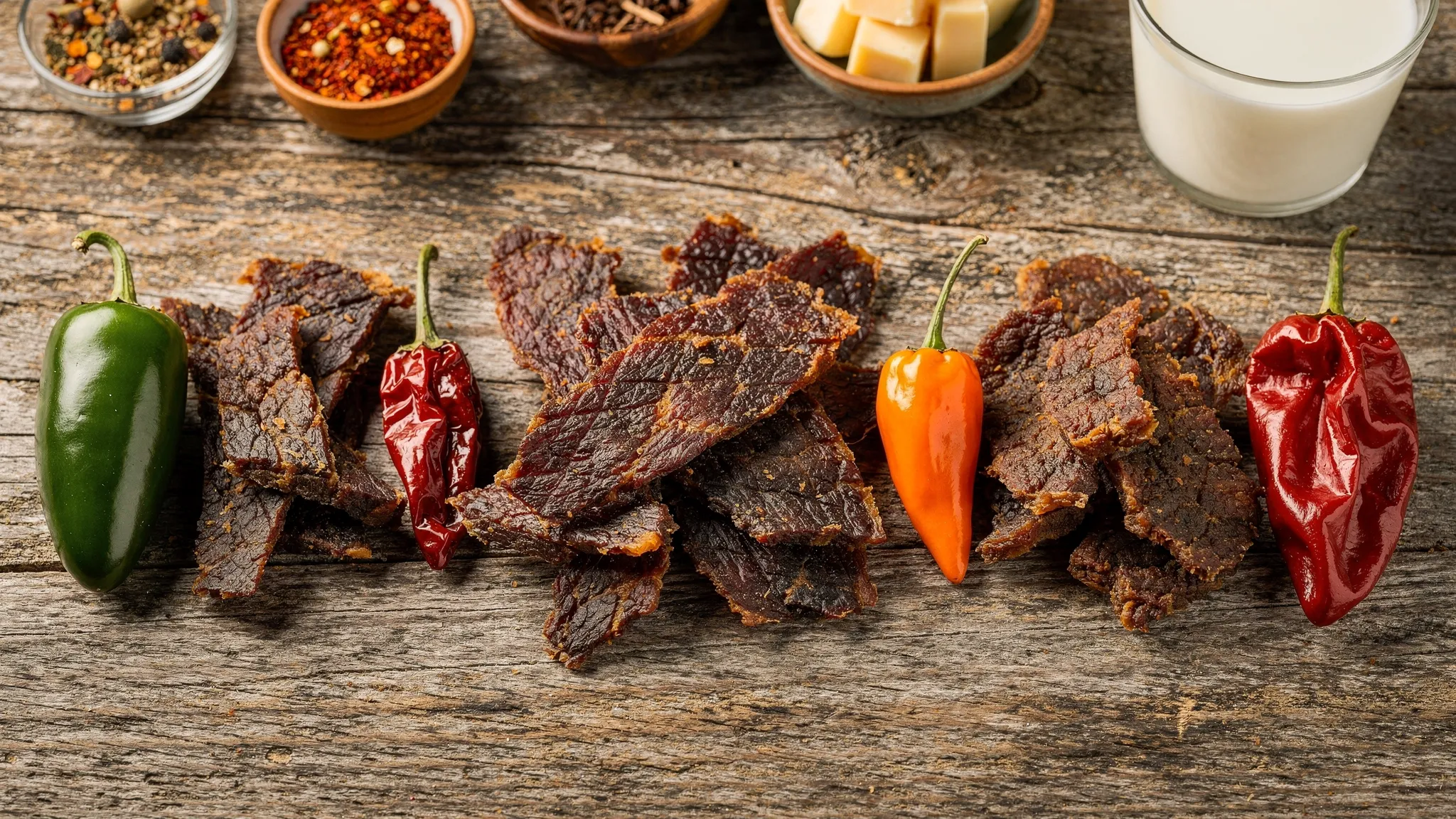
Spicy beef jerky is one of those snacks that sounds simple until you actually try to buy it online. One brand’s “hot” is another brand’s “mild plus,” and the same pepper can taste totally different depending on how the jerky is made.
This guide breaks down spicy beef jerky heat levels in a way that helps you choose confidently, whether you want a gentle tingle for road trips or a face-sweating burner for your spice-head friends.
What “heat level” really means (and why labels feel inconsistent)
Most “heat” in spicy foods comes from capsaicinoids, the compounds in peppers that trigger heat receptors. To compare peppers, the industry often references the Scoville scale, which reports heat as Scoville Heat Units (SHU). The scale was originally developed by pharmacist Wilbur Scoville, and today SHU values are typically determined using lab methods rather than taste panels.
For a quick refresher on SHU and how it’s used, see Encyclopaedia Britannica’s overview of the Scoville scale.
Here’s the catch: SHU describes the pepper, not the final jerky experience. Jerky can feel hotter or milder than you expect because spice “delivery” depends on ingredients, texture, and how the pepper is applied.
Spicy beef jerky heat levels (a practical buyer’s scale)
Instead of chasing exact SHU numbers (which most jerky packages do not list), it’s more useful to think in levels. This table gives you a realistic way to interpret product descriptions like “zesty,” “hot,” or “extreme.”
| Heat level (buyer-friendly) | What it feels like | Common pepper cues (examples) | Best for | What to expect in the flavor |
|---|---|---|---|---|
| Mild | Warmth, light tingle, no lingering burn | Jalapeno-style heat, “peppery,” “zesty” | New to spicy jerky, everyday snacking | Beef-forward taste with a small kick |
| Medium | Noticeable heat, short linger, you reach for water once | Chipotle-style heat, “smoky heat,” “medium hot” | Most people who like spicy snacks | Balanced heat plus smoke, garlic, or black pepper notes |
| Hot | Strong burn that builds, lips tingle, longer finish | Cayenne-style heat, “hot,” “extra hot” | People who regularly buy spicy foods | Heat becomes a main character, not just background |
| Very hot | Immediate punch, sweat potential, lingering burn | Habanero-style heat, “fiery,” “insane” | Spice fans who know their tolerance | Fruity pepper notes often show up alongside the burn |
| Extreme | Intense, sharp, persistent, can overpower flavor | Ghost-style heat, “extreme,” “challenge” | Experienced spice heads only | Heat-first experience, flavor can become secondary |
If you want a deeper pepper-focused breakdown (SHU ranges and pepper types), Bulk Beef Jerky already has a dedicated guide: The peppers that fuel the best hot & spicy beef jerky.

Why one “hot” jerky hits harder than another
Two jerkies can use similar peppers and still feel completely different. Here are the biggest drivers of perceived heat when you’re chewing, not just tasting a sauce.
1) How the spice is applied: marinade vs surface seasoning
- Marinade heat tends to feel more integrated and gradual, because the spice compounds are distributed through the meat.
- Surface heat (pepper flakes, powders, dry rubs) can hit faster and feel more intense at the beginning of the chew.
If you’ve ever tried a jerky that feels “spicy on the first bite” but calms down quickly, that’s often surface seasoning at work.
2) Sweetness can soften or sharpen heat
Sweetness changes how people perceive burn. A slightly sweet jerky can make heat feel smoother and more rounded, while a very dry, savory jerky can make pepper feel sharper.
If you prefer heat without sweetness, you might naturally gravitate toward sugar-free spicy beef jerky styles. Bulk has a good shopper-oriented explainer here: Sugar Free Beef Jerky: Best Options and Tips.
3) Fat and oil can buffer capsaicin
Capsaicin is not water-soluble, it’s more likely to dissolve in fats and oils. That’s one reason spicy foods sometimes feel less aggressive when there’s a little more richness involved.
For a scientific overview of capsaicin (including how it interacts with the body), you can browse NIH’s National Library of Medicine resources (search “capsaicin TRPV1”).
4) Jerky texture changes the “burn timeline”
A tender bite can deliver flavor quickly and fade faster. A tougher, longer chew can keep pepper compounds in contact with your mouth longer, making heat feel like it builds.
If you’re not sure which texture you prefer, this guide helps you predict it when buying online: Beef Jerky Chew: Tender, Tough, or Rip n Chew?.
5) Smoke, salt, and acidity affect the perception of spice
- Smoke can amplify the sense of intensity, even when SHU is not higher.
- Salt can heighten overall flavor impact.
- Acidity (like vinegar-based seasoning) can make heat feel brighter and faster.
So when a product description says “smoky hot,” it may taste bolder than a similarly spicy jerky with a sweeter profile.
Heat level clues you can spot on an ingredient label
When buying spicy beef jerky online, you rarely get a Scoville number, but you do get patterns.
Pepper placement matters
Ingredients are generally listed in descending order by weight. You can often infer intensity from how early pepper ingredients appear.
Watch for “extract” language
Some extreme products use pepper extracts. These can feel more aggressive and less “pepper-flavored,” even if the goal is pure heat. If you’re buying for flavor first, you may prefer jerkies flavored with whole peppers, powders, or flakes.
Consider dietary fit (it changes your spicy options)
People often search for spicy beef jerky while also trying to meet a diet preference. That can affect which spicy styles are realistic:
- Gluten-free: heat is usually easy to do gluten-free, but always verify sauces and seasonings.
- Sugar-free: spicy jerkies that lean savory can feel hotter, because there’s no sweetness rounding the edges.
For a broader label-reading framework (beyond spice), this is worth bookmarking: Healthy Beef Jerky: Labels to Trust, Traps to Avoid.
Choosing the right spicy beef jerky for your tolerance
If you want to enjoy the heat without regretting the order, match your choice to the moment, not just your ego.
If you’re new to spicy jerky
Start at mild or medium, then move up once you know how the brand’s “hot” is calibrated. In jerky, heat often builds with chewing, so your first bite is not always the full story.
If you love spicy snacks but still want to taste the beef
Aim for medium to hot, especially if the description mentions balance (for example, “smoky,” “garlic,” “black pepper,” “savory”). That usually signals flavor complexity, not just raw burn.
If you’re buying for a group
Go wider, not hotter. A mix of mild, medium, and one hot option makes almost everyone happy. If you’re stocking up for game day, hunting camp, or office snacks, variety beats a single extreme bag that only one person can eat.
Bulk buyers often do best with customizable bundles so you can spread risk across heat levels (instead of committing to five pounds of “too hot”). Bulk Beef Jerky offers bulk purchasing and build-your-own options on their site: bulkbeefjerky.com.
How to “recover” from spicy beef jerky (and enjoy it more)
If spicy jerky is part of your regular snack rotation, a couple of practical habits make it more enjoyable.
Pairings that tame the burn
- Protein + fat pairings (like nuts or cheese) often reduce the lingering burn.
- Something slightly sweet (like dried fruit) can smooth the edges of heat.
What not to rely on
Plain water usually just moves capsaicin around. If you overshot your heat level, something with fat tends to help more than another sip of water.
Know when to scale back
If you have reflux, GI sensitivity, or you’re snacking right before a long drive, “very hot” and “extreme” can be a bad trade. Spicy beef jerky is supposed to be satisfying, not a punishment.
Quick takeaways: how to buy spicy beef jerky with confidence
Spicy beef jerky heat levels are easier to navigate when you focus on experience rather than chasing exact pepper SHU numbers.
- Treat “mild, medium, hot, very hot, extreme” as your real-world scale.
- Expect texture and seasoning style to change how heat hits.
- Use ingredient cues (pepper placement, extracts, sweetness) to predict intensity.
- When in doubt, sample first, then buy in bulk once you know your level.
If you want a smart way to explore different heat levels without getting stuck with the wrong bag, start with a mixed order or build a box that spans mild through hot at Bulk Beef Jerky.