



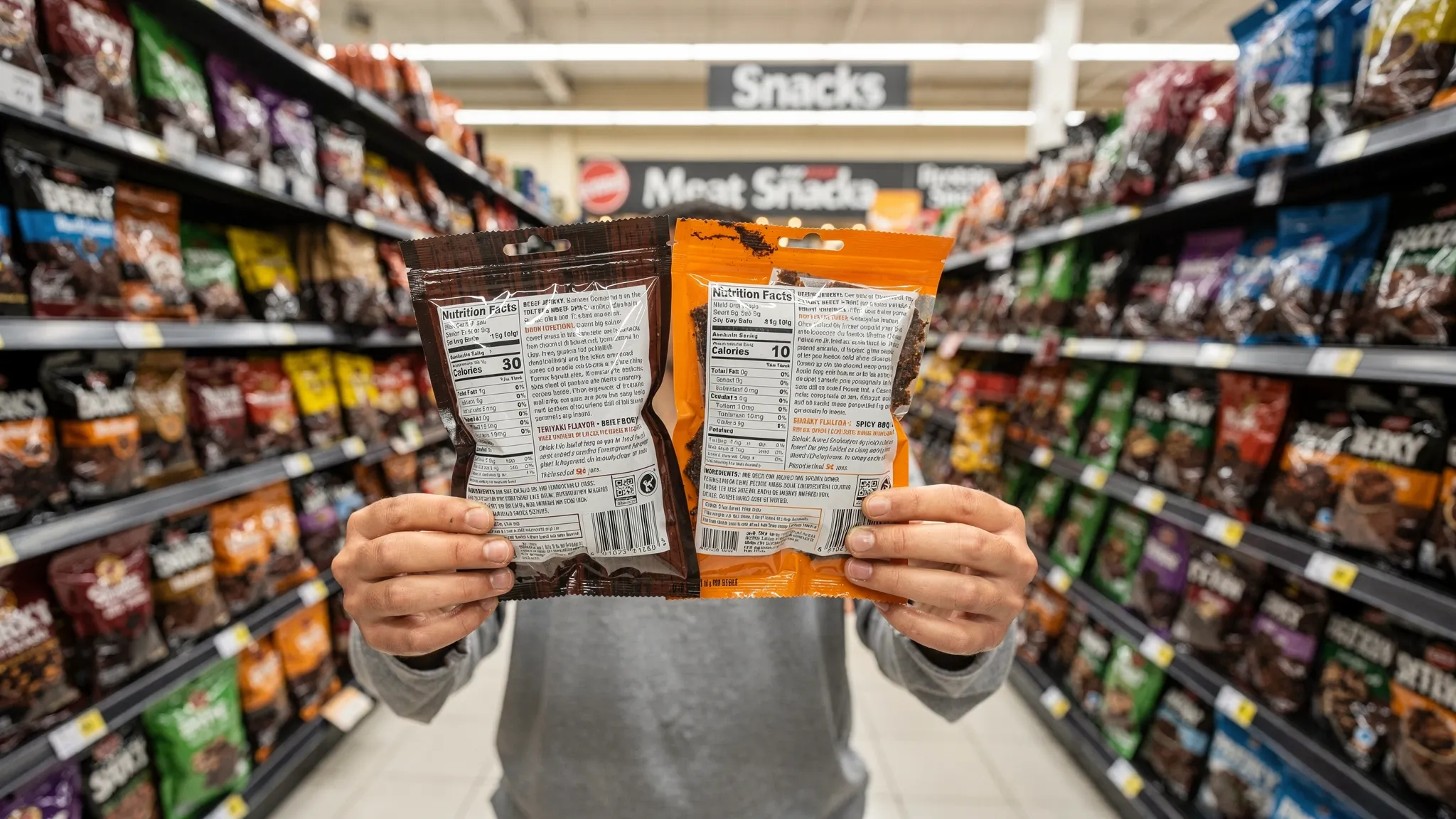
The beef jerky aisle (and the endless scroll of online options) has never been more crowded. That’s great for flavor variety, but it also makes it easy to overpay for a bag that’s too sugary, too salty, too tough, or just not the style you thought you were buying.
If you want to compare beef jerky brands like a pro, you need a simple framework that works whether you’re shopping for gym snacks, road trips, gifts, or bulk pantry stocking.
Step 1: Identify what “jerky” means in that brand’s lineup
Not every “jerky” product eats the same, even when the bag looks similar.
- Whole-muscle jerky is made from sliced (or sometimes slab-cut) muscle. This is the classic experience: visible grain, chew, and variation from piece to piece.
- Chopped-and-formed (restructured) jerky uses ground or chopped meat that’s formed into strips. It can be more uniform and tender, but it’s a different texture.
- Sticks and meat snacks are their own category (great for convenience), but don’t compare them 1:1 with jerky on texture or even macros.
When comparing brands, make sure you’re comparing the same product type and cut style, otherwise you’ll think one brand is “better,” when it’s just “different.”
Step 2: Read the ingredients list first (not the front of the bag)
Marketing claims are helpful, but the ingredients panel is where the truth lives.
The “clean label” check
For many shoppers, a strong ingredients list looks like:
- Beef as the first ingredient
- Seasonings you recognize
- A short list that matches the flavor (for example, pepper, garlic, spices)
Longer ingredient lists are not automatically bad, but they often signal extra sweeteners, stabilizers, or flavor systems that may not match what you want.
Sugar and sweeteners: know what you’re choosing
Jerky brands range from almost no sweetness to candy-like. If you’re avoiding sugar, look for:
- Sugar-free claims (then confirm on the Nutrition Facts)
- Low total sugars per serving
- No sugar-heavy ingredients near the top of the list
Also remember: teriyaki-style flavors often use sweet components by design, so “sweet” is not inherently “low quality,” it just needs to fit your goal.
Curing agents and preservatives (and why labels can be confusing)
Some jerky uses curing agents like sodium nitrite. Others use “uncured” style processes that may rely on ingredients such as celery powder (a natural source of nitrates). If you’re trying to avoid certain curing ingredients, the only reliable method is reading the full label.
For shoppers who care about labeling terms, USDA FSIS also explains how terms like “natural” are used on meat and poultry labels (including the expectation of no artificial ingredients and minimal processing, with an explanatory statement) on its labeling guidance pages: USDA FSIS labeling policies.
Step 3: Compare nutrition like a pro (use per-ounce math)
Jerky packages love to highlight protein, but you’ll make better decisions by comparing a few key numbers per ounce.
The 5 numbers that matter most
- Protein per ounce: Helps you gauge “performance snack” value.
- Calories per ounce: Higher isn’t bad, it depends on your needs.
- Sodium per ounce: Big differentiator between brands.
- Added sugars per ounce: Critical if you’re aiming for low sugar.
- Fat per ounce: Often reflects cut choice and dryness.
Because serving sizes can vary, normalize the comparison:
- If one brand lists 2 oz per serving and another lists 1 oz, convert both to per 1 oz.
Sodium: put the number in context
Jerky is a preserved food, so sodium is expected, but there’s still a wide range between brands.
As a benchmark for your day, the Dietary Guidelines for Americans recommend limiting sodium to less than 2,300 mg per day for adults: Dietary Guidelines for Americans.
You don’t need jerky to be “low sodium” to fit your diet, but you should know if one bag is quietly taking a huge chunk of your daily limit.
A quick “label translation” table
Use this table as a practical way to interpret what you see on the Nutrition Facts panel.
| What you’re comparing | Why it matters | What to look for on the label | Pro tip |
|---|---|---|---|
| Protein | Satiety and performance | Grams of protein per serving | Convert to per-ounce for apples-to-apples |
| Sodium | Hydration, blood pressure considerations | mg sodium per serving | If you snack often, sodium adds up fast |
| Added sugar | Energy swings and diet fit | “Added Sugars” line | “0g added sugar” is different from “low sugar” |
| Calories | Total intake control | Calories per serving | Some “tender” styles can be more calorie-dense |
| Ingredients | Quality and preference | Ingredient list order | First few ingredients matter most |

Step 4: Evaluate texture and style (this is where most disappointment happens)
Two brands can have similar macros and still feel totally different to eat. Texture is usually driven by cut, slice direction, and drying style.
Common jerky styles you’ll see
- Old-school dry: Firmer, drier, and chewier. Great if you like traditional “rip and chew.”
- Tender or soft: Easier bite, sometimes thicker pieces, sometimes more moisture.
- Brisket-style: Often prized for richer beef flavor and a distinctive bite (brisket is its own muscle story).
- Hot and spicy: Heat can be from peppers, extracts, or both (and the experience varies a lot).
If you already know you prefer a traditional chew, look for brands that explicitly call out an old-school approach. If you want a more tender bite for frequent snacking, look for brands that describe soft texture and thinner fibers.
If you’re curious how cut influences outcome, Bulk’s deep dive on selecting lean cuts is a solid primer: Choose the best cuts of beef for quality jerky.
Step 5: Check manufacturing and food safety cues (quiet signals of seriousness)
Most consumers never look for this, but it’s one of the most professional ways to compare brands.
USDA inspection and shelf stability
Commercial jerky is typically made under regulated food safety plans. Brands may reference USDA inspection for meat products, and you may see establishment numbers on packaging.
If you want the official view on safe jerky handling and storage, USDA FSIS provides consumer guidance here: Jerky and food safety (USDA FSIS).
Also pay attention to whether a product is:
- Shelf-stable (can be stored unopened at room temp)
- Refrigerated (often moister, sometimes less “classic”)
Neither is automatically better. Shelf-stable is usually more convenient for travel and bulk stocking.
Smoke: real smoking vs smoke flavor
Some brands rely on natural smoking processes, others use smoke flavoring. Both can taste good, but if you care about traditional smokehouse character, read the ingredients and the product description closely.
For a more detailed explanation of smoking approaches and why they matter for flavor, see: Capturing meat’s full flavor: the importance of proper smoking.
Step 6: Match the brand’s lineup to your diet and lifestyle
This is where you stop comparing “the best jerky” and start comparing “the best jerky for you.”
If you need gluten-free
“Gluten-free” jerky exists, but you should still verify, especially for flavors that may use soy sauce or other seasoning blends. If gluten matters medically, look for clear gluten-free labeling and allergen statements.
If you want sugar-free or low sugar
This is a major point of separation between brands. A sugar-free option is not just about dieting, it’s also about taste preference (some people simply prefer savory-forward jerky).
If sodium is a concern
Some brands offer lower-sodium lines, but make sure you compare the actual milligrams, not just front-of-bag language.
Step 7: Compare value correctly (price per ounce + shipping + waste)
A “cheap” bag can become expensive if:
- The bag is small
- Shipping is high
- The product doesn’t match your preference, so it sits in the pantry
Use a simple price-per-ounce calculation
| What to calculate | Formula | Why it matters |
|---|---|---|
| Price per ounce | Total price / total ounces | True product cost |
| Delivered price per ounce | (Product price + shipping) / total ounces | Real cost to your door |
| Bulk advantage | Compare delivered price/oz across sizes | Bulk often wins when you already know your favorite |
Bulk sizing is especially useful when you’ve already identified your preferred texture and flavor family. If you’re still exploring, variety packs or build-your-own bundles usually reduce the risk of ending up with pounds of the “wrong” jerky.
Step 8: Use a brand scorecard (and don’t overthink it)
Here’s a practical way to compare beef jerky brands in under 5 minutes. Pick the criteria that matter to you, then rate each brand 1 to 5.
| Criteria | What “good” looks like | How to verify |
|---|---|---|
| Flavor fit | You actually want to finish the bag | Flavor descriptions, reviews, sampler options |
| Texture fit | Matches your chew preference | Product descriptions like “old-school,” “tender,” “dry” |
| Ingredient alignment | Fits your standards (sweeteners, curing, allergens) | Ingredients list |
| Sodium control | You can eat it often without blowing your day | Nutrition Facts (mg per ounce) |
| Protein value | Strong protein per calorie for your goal | Nutrition Facts (protein grams) |
| Purchase flexibility | Bulk sizes, bundles, variety | Size options, bundle tools |
| Shipping economics | Free shipping thresholds or fair rates | Shipping policy at checkout |
| Trust signals | Clear labeling, consistent product | Reviews, established brand info, labeling clarity |
The key is to commit to a comparison method. Most shoppers bounce between hype and packaging, then wonder why the experience feels inconsistent.

What this looks like in real life (4 common shopper profiles)
You’re buying for training and high-protein snacking. Prioritize protein per ounce, added sugars, and a flavor you won’t get tired of. Many people land on savory, peppery, or sugar-free options for everyday use.
You’re stocking a pantry for travel, hunting, or road trips. Prioritize shelf stability, bulk sizing, and delivered price per ounce. Consistency and packaging matter more than novelty.
You’re buying a gift. Prioritize variety, presentation, and “crowd-pleaser” flavors, then add one or two adventurous options (spicy or regional styles) for fun.
You’re managing sugar or gluten. Prioritize label verification over flavor hype, then select within the brands that clearly meet your dietary requirements.
A practical way to test a new jerky brand (without wasting money)
If you’re exploring new brands, the most efficient approach is:
- Start with a variety sampler or smaller bundle.
- Choose one flavor you already know you like (peppered, teriyaki, hot) so you have a baseline.
- Only buy bulk once you’ve confirmed texture and salt level are a match.
That single habit saves more money than chasing discounts.
Where Bulk fits in when you’re comparing brands
If your goal is to compare confidently and then buy in a way that matches your lifestyle, Bulk is set up for exactly that style of shopping: bulk purchasing options, customizable bundles, and variety-focused ways to dial in what you like.
Depending on what matters to you, you can look for:
- Build-your-own snack box flexibility (helpful when you’re still testing flavors)
- Bundle deals (useful once you know your go-to lineup)
- Bulk sizing for better long-term value
- Dietary-friendly options like sugar-free and gluten-free selections
- Distinct styles like all-natural brisket jerky and old-school Texas-style chew
You can explore current options and build a box directly here: Bulk Beef Jerky.
If you want to sharpen your “pro” comparison skills even further, Bulk’s guide on beef quality signals is also worth a read: What every meat eater needs to know about grades of beef.
The bottom line
Comparing beef jerky brands isn’t about finding a single “best” bag. It’s about matching style, label, nutrition, and value to how you actually snack.
Use the scorecard, normalize everything to per ounce, and let your preferences do the final filtering. Once you do that, you’ll stop gambling on random bags and start buying jerky that reliably tastes right, fits your diet, and makes sense to stock in bulk.