



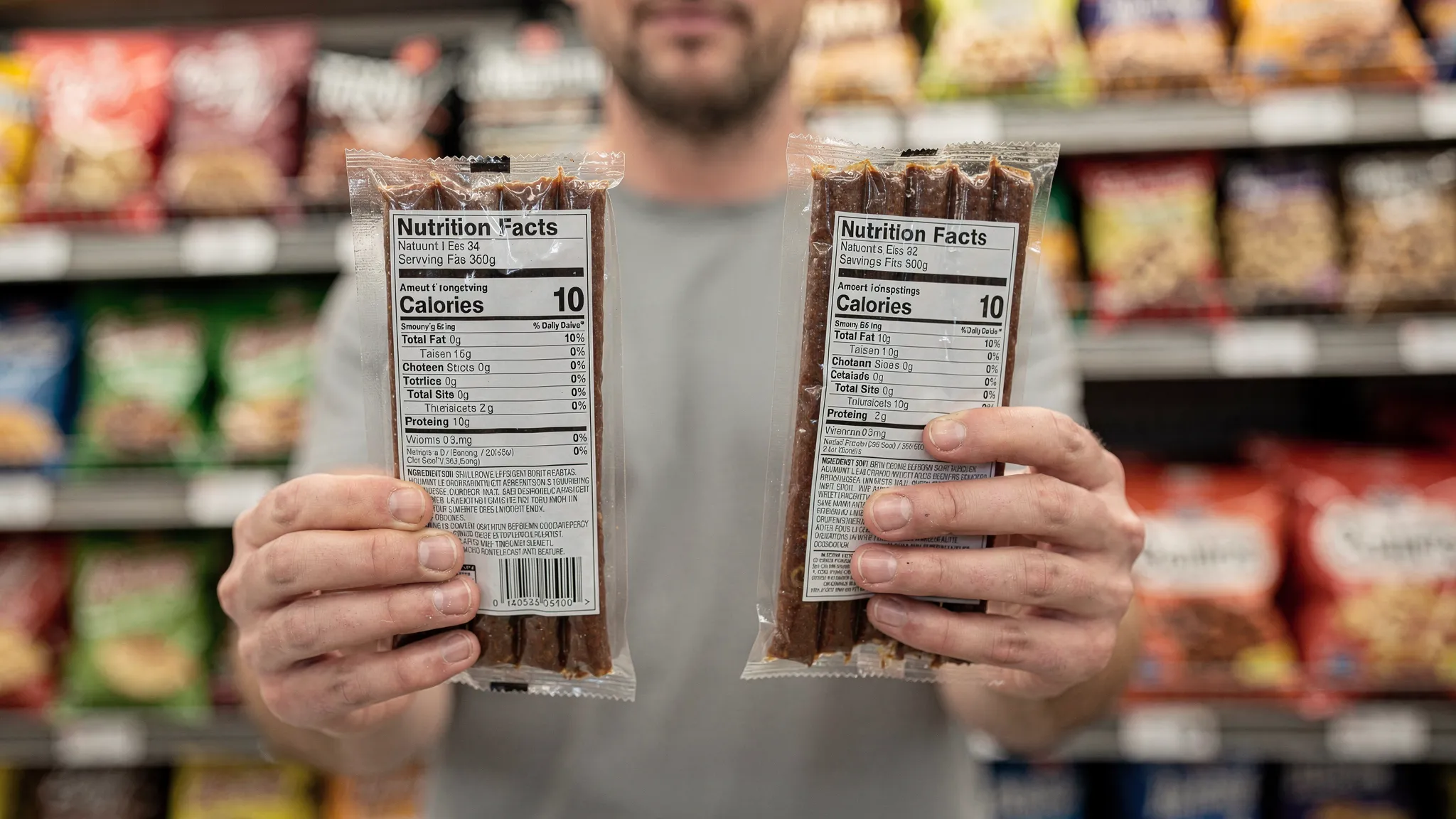
“Healthy beef sticks” sounds straightforward, until you flip a package over and realize two sticks that look identical can have totally different sodium, sugar, and ingredient profiles.
If you’re buying beef sticks to support training, manage carbs, keep ingredients clean, or simply avoid the afternoon crash, the key is knowing what to check before you stock up. This guide walks through the most important label and product-page signals so you can pick healthy beef sticks that actually match your goals.
First, define what “healthy” means for you
Beef sticks are typically high-protein, portable, and satisfying, which can make them a smart alternative to ultra-processed chips or candy. But “healthy” depends on what you’re optimizing for.
- High-protein snacking: You want strong protein per serving (and per calorie).
- Low-carb or sugar-free: You want 0 g added sugar (and often 0 g total sugar).
- Heart or blood pressure goals: You want a sodium number that fits your day.
- Ingredient simplicity: You want a short list, recognizable ingredients, and clear allergen info.
Once you know your priority, it’s easier to judge trade-offs. For example, a stick can be sugar-free and still be very high in sodium, or it can be lower sodium but slightly higher in carbs.
Check the ingredient list before the marketing claims
Front-of-package language is not standardized the way the Nutrition Facts panel is. Ingredient lists and allergen statements are where the truth lives.
1) What is the protein source (and is it first)?
For beef sticks, the base is often ground or chopped beef (as opposed to whole-muscle jerky). Look for:
- Beef listed first (or at least a clear meat-first formulation)
- Clear descriptions such as “beef” or “beef and pork” (if blended)
- Minimal “filler” ingredients if you’re aiming for a cleaner label
It’s normal to see spices, salt, and curing ingredients. What you want to be cautious about, depending on your preferences, is a long list of binders, starches, or multiple sweeteners.
2) Added sugar and sweeteners
Even savory beef sticks can include sugar for flavor balance, fermentation, or glaze-like profiles. If your goal is “healthy” as in low sugar, check:
- Total Sugars and Added Sugars on the Nutrition Facts
- Ingredient list for sugar sources (for example: sugar, brown sugar, honey, maple syrup, dextrose)
If you’re trying to stay very low-carb, also watch for sugar alcohols or alternative sweeteners and how your stomach tolerates them. “Sugar-free” does not automatically mean “better for everyone,” but it can be a great fit for many shoppers.
3) Curing ingredients (nitrite, “uncured,” celery powder)
Many beef sticks are cured for safety, shelf stability, and flavor. You may see sodium nitrite or, on products marketed as “uncured,” ingredients like celery powder (a natural source of nitrates/nitrites).
If you’re comparing products, the most practical move is to:
- Focus on the overall nutrition (especially sodium) and how often you eat them
- Choose the product that best fits your preferences for ingredients and processing
For label-term clarity, the USDA FSIS has background on curing and labeling concepts across meat and poultry products in its public resources and regulations (start at the USDA Food Safety and Inspection Service).
4) Allergens and gluten
Some beef sticks include soy, dairy, or wheat-derived ingredients (often via seasonings, sauces, or processing aids). If you need gluten-free snacks, don’t rely on “sounds gluten-free.” Confirm:
- A gluten-free claim from the brand (if present)
- The allergen statement (common allergens must be declared)
If you’re shopping for gluten-free or sugar-free options, Bulk Beef Jerky notes dietary variety (including gluten-free snacks and sugar-free jerky options) across its snack lineup.
Use the Nutrition Facts panel to compare apples to apples
Beef sticks vary a lot in size. One brand’s “1 stick” might be 0.5 oz, another might be 1.5 oz. To compare fairly, you need a consistent baseline.
A simple method is per-ounce math:
- Compare protein per ounce
- Compare sodium per ounce
- Compare added sugar per ounce
You can do this quickly by dividing the per-serving number by the serving size in ounces.
A practical “healthy beef sticks” scorecard
There is no universal perfect number, but the table below gives common, practical benchmarks many shoppers use when comparing options.
| What to check | Why it matters | A practical benchmark (adjust to your goals) |
|---|---|---|
| Protein | Satiety and muscle support | Aim for “protein-forward” relative to calories |
| Added sugar | Carb control and ingredient simplicity | Prefer 0 g added sugar if you’re minimizing carbs |
| Sodium | Biggest nutritional downside for many meat snacks | Lower is better if you snack daily |
| Saturated fat | Heart-health consideration | Lower sat fat can be helpful if you eat multiple sticks |
| Calories per serving | Portion control | Make sure the stick fits your snack budget |
If you’re specifically watching sodium, the American Heart Association cites 2,300 mg/day as an upper limit for most adults and notes 1,500 mg/day as an ideal target for many people (AHA sodium guidance). A single high-sodium beef stick can take a meaningful bite out of that daily budget.

Protein-to-calorie ratio (the “is this actually a performance snack?” test)
For many buyers, the whole point of beef sticks is convenient protein. If two sticks have the same calories but one has significantly more protein, that’s usually the better pick for training, hiking, or staying full between meals.
Also watch the serving size trick: a bag might look “high protein,” but the number may be for multiple mini sticks.
Watch saturated fat if you snack on sticks often
Beef sticks can be lean, or they can be higher-fat depending on the cut, formulation, and style. If you eat them frequently (daily, road trips, desk drawer, kids’ lunches), saturated fat adds up faster than people expect.
You don’t need to fear fat, but you should choose intentionally. If heart health is a priority, compare saturated fat across brands and look for an option that fits your overall day.
Beef stick-specific quality cues many shoppers miss
Jerky guidance helps, but beef sticks have a few unique “gotchas.”
Texture and formulation: sticks are usually ground or restructured
Unlike whole-muscle jerky, sticks are often made from ground or finely chopped meat with seasonings, then smoked and/or dried. That means:
- Ingredient lists can be longer (binders, spices, cultures)
- Macros can vary more widely (especially fat)
- The eating experience is different (more tender, less chew)
This is not inherently bad. It just means label-reading matters more, because you cannot “see” quality the way you can with visible whole-muscle grain.
Smoke flavor: natural smoke vs liquid smoke
Some products are smoked traditionally; others use liquid smoke for consistency. Taste preference is personal, but if you care about processing style, look for how the brand describes smoking. Bulk Beef Jerky has a helpful primer on smoking methods that explains the difference between smoke approaches (Capturing Meat's Full Flavor: The Importance of Proper Smoking).
Casing and “snap”
Beef sticks may use collagen casings, natural casings, or be skinless. Casing impacts bite and snap more than health, but it can affect satisfaction and whether you feel like you got your money’s worth.
If you’re buying bulk online, scanning reviews for texture notes is often the fastest way to avoid disappointment.
Food safety and trust signals
Because beef sticks are meat, manufacturing controls and labeling compliance matter.
Look for USDA inspection and clear manufacturer accountability
Commercial meat products in the U.S. are regulated, and USDA FSIS oversight is a major trust signal in the category. If you want to understand what inspection marks mean and why they matter, start with the USDA FSIS website.
Shelf-stable vs refrigerated: read handling instructions
Not all beef sticks are truly shelf-stable in every condition. Always check:
- “Keep refrigerated” or “refrigerate after opening” statements
- Packaging style (vacuum sealed, resealable, multi-pack)
- How fast you’ll realistically eat what you buy
If you travel or keep snacks in a hot car, be extra conservative. Heat can degrade quality quickly even when food safety is technically maintained.
What to check when buying healthy beef sticks online
Online shopping can be better than in-store for comparing labels, because you can actually zoom in and compare multiple products without standing in an aisle.
Here’s a simple product-page checklist to use before you add to cart.
| Product-page item | What you want to see | Why it matters |
|---|---|---|
| Nutrition Facts image | Clear, readable panel | Lets you compare sodium, sugar, protein honestly |
| Full ingredient list | Not truncated | Helps you avoid allergens and unwanted additives |
| Net weight and servings | Clear ounces and serving size | Prevents “protein per bag” confusion |
| Allergen statement | Direct and specific | Critical for gluten-free and allergy needs |
| Storage guidance | Shelf-stable vs refrigerated | Prevents waste and quality issues |
If a page is missing the ingredient list or Nutrition Facts, consider that a reason to pause. Transparent brands make it easy to verify.
Matching the right stick to your goal (without overthinking it)
If you want the quickest way to choose, use these simple “best fit” rules.
If you’re going low-carb or sugar-free
Prioritize 0 g added sugar (and ideally very low total sugar), then check sodium. Many shoppers assume sugar-free automatically equals “healthy,” but sodium still varies a lot.
If you’re fueling training, work, or long drives
Prioritize protein per serving and protein per ounce. Then pick a sodium level that fits how often you snack. If you eat sticks daily, a slightly lower sodium option can make your overall diet easier to manage.
If you’re watching sodium for blood pressure
Use sodium as your first filter, not afterthought. Compare per ounce, not per stick, and remember the AHA daily guidance when you budget your day (AHA sodium guidance).
If you want the simplest ingredient profile
Choose meat-forward options with a shorter ingredient list, recognizable spices, and a clear allergen statement. If you’re comparing jerky and sticks, sticks tend to have more “functional” ingredients due to how they’re made, so you may need to look a bit harder.
Buying in bulk without ending up with a drawer full of regret
Buying beef sticks in bulk is usually the best way to keep a high-protein habit consistent, and it can lower your cost per snack. The risk is committing to a flavor or texture you do not love.
A few practical strategies:
- Start with a sampler or smaller mix before going all-in on one flavor.
- Choose brands that make it easy to build variety so you do not burn out.
- Store backup stock in a cool, dry place and rotate older product forward.
If you like the idea of variety, Bulk Beef Jerky offers bulk purchasing, starter kits, and a build-your-own snack box approach, plus bundle deals and free shipping over $100 (helpful if you’re stocking up for a crew, a season of road trips, or a busy training block). You can also explore their broader “healthy label” thinking in their related guide: Healthy Beef Jerky: Labels to Trust, Traps to Avoid.

The bottom line
Healthy beef sticks are not one thing. The best choice depends on your priorities, but the evaluation process is consistent:
Check the ingredient list for meat-first simplicity, verify sugar and sodium on the Nutrition Facts, compare products per ounce, and confirm storage and allergen information. Do that, and you will stop buying beef sticks based on hype, and start buying the ones that actually fit your routine.