



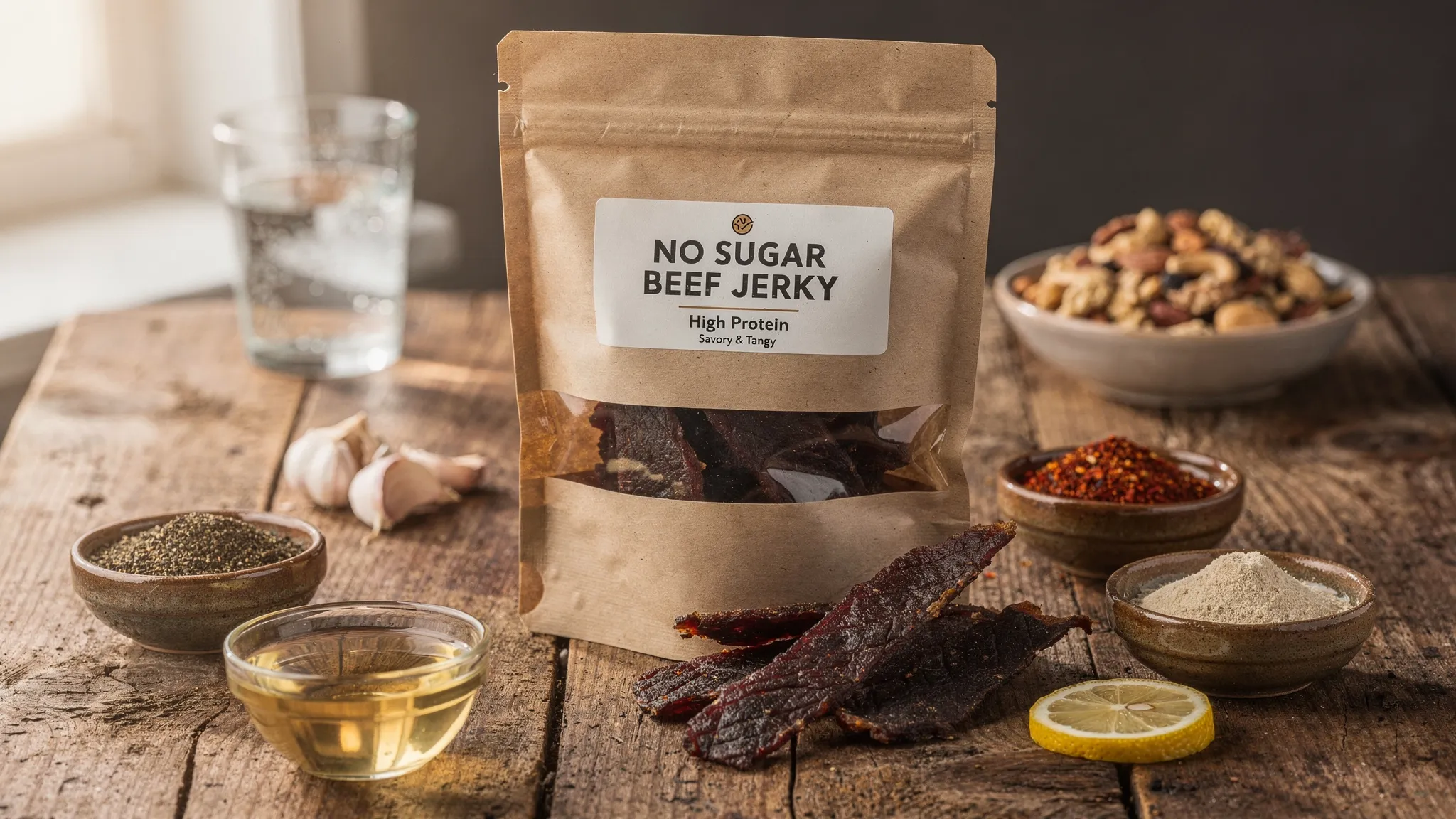
A lot of “healthy” snacks are secretly dessert with a fitness label. They taste great, they hit fast, and then you are hungry again 30 minutes later.
No sugar beef jerky is the opposite experience: big flavor, real chew, and steady satisfaction. Done right, it delivers the salty, smoky, spicy payoff people want from jerky, without leaning on sugar to make it addictive.
Below is a practical guide to what “no sugar” can mean on a label, how to avoid common gotchas, and how to pick a zero-crash jerky that still tastes like a treat.
Why so much jerky contains sugar (and why you do not need it)
Sugar shows up in jerky for three main reasons:
- Flavor balance: Sweetness softens salt, smoke, pepper heat, and vinegar tang.
- Color and surface browning: Sugars can help create that glossy, dark finish.
- Familiar profiles: Teriyaki, honey BBQ, and “sweet heat” flavors are mainstream, and sugar is an easy way to get there.
The key point is that sugar is optional. Jerky can taste bold and “complete” by using other flavor tools like smoke, black pepper, garlic, onion, chile, and acids (like vinegar or citrus), plus the natural savoriness of beef.
“No sugar” vs “sugar-free” vs “no added sugar”: quick label clarity
Shoppers often search for “no sugar,” but packages use specific regulated phrases. In the U.S., the FDA defines “sugar free” as containing less than 0.5 grams of sugars per serving. (A serving can be smaller than you expect, so always check serving size.) You can review FDA guidance on sugar claims in their labeling resources: FDA food labeling and nutrition.
Here is how common front-of-bag claims usually differ:
| Label claim | What it typically means for you | What to check before buying |
|---|---|---|
| Sugar free | Very low sugars per serving (under the FDA threshold) | Serving size, total carbs, ingredient list for sweeteners |
| No added sugar | No sugar added during processing (but may contain naturally occurring sugars) | Nutrition Facts “Total Sugars,” ingredients like fruit juice concentrates |
| Zero sugar | Marketing term often used similarly to sugar free | Same as sugar free, verify the numbers |
| Reduced sugar | Less sugar than a reference product, not necessarily low | Compare grams of sugar per serving, not just the claim |
If your goal is truly taste without the crash, start with the Nutrition Facts:
- Total Sugars (and “Includes Xg Added Sugars”)
- Total Carbohydrate
- Protein per serving
Then confirm the ingredient list matches your preferences.
The “crash” is not only about sugar, it is about the whole snack
Sugar is a common culprit in the snack rollercoaster, but it is not acting alone.
A fast-digesting snack that is mostly refined carbs (and low in protein and fiber) can leave you chasing another hit. Jerky tends to be different because it is protein-forward, and protein is generally associated with greater satiety than carbs or fat alone.
That does not make jerky a magic food, but it explains why many people find it easier to stay on track with:
- low-carb plans
- higher-protein eating
- long gaps between meals (travel, shift work, field work)
If you are aiming to limit added sugars, the Dietary Guidelines for Americans recommend keeping added sugars under 10% of calories per day. You can read the current recommendations here: Dietary Guidelines for Americans.
How no sugar jerky still tastes “complete”: flavor builders that work
When brands remove sugar, the jerky has to stand on technique and seasoning. The best no sugar options usually rely on a few proven levers.
| Flavor builder | What it contributes | What it tastes like in jerky |
|---|---|---|
| Smoke (real smoke or smoke flavor) | Depth and lingering finish | Campfire, BBQ, “old-school” richness |
| Black pepper and chile | Punch and heat | Bold, warming spice, sweet-free “snackable heat” |
| Garlic and onion | Savory roundness | More “steakhouse,” less “candy glaze” |
| Vinegar or citrus | Brightness and balance | Tangy, clean finish that keeps you reaching back in |
| Umami ingredients (like soy sauce, tamari, or yeast extracts) | Meatiness and fullness | Bigger flavor even without sweetness |
This is why many people who “hate sugar-free foods” still like sugar-free jerky: it does not need to taste like a substitute when the seasoning and smoke do the heavy lifting.

Watch-outs: when “no sugar” does not mean “simple”
Some shoppers want no sugar for blood sugar reasons. Others want it because they prefer fewer ingredients. Those are different goals.
A few common watch-outs:
Alternative sweeteners and sugar alcohols
Sugar-free jerky may use sweeteners to round out flavor. Whether that is “good” depends on your preference and how your body tolerates them.
Instead of trying to memorize every sweetener, use a simple rule: if you avoid sweeteners, read the ingredient list first, then confirm sugars on the Nutrition Facts.
“Hidden sugar” ingredients
Even if a product does not taste sweet, sugar can sneak in through ingredients like:
- cane sugar, brown sugar
- honey, maple syrup
- molasses
- fruit juice concentrates
If you want truly no sugar, these are easy “nope” signals.
Serving size games
A label can show 0g sugar if the serving size is small enough that sugars round down. If you eat multiple servings (common with jerky), the real intake can be higher.
Practical tip: compare per ounce when possible, because jerky serving sizes vary a lot.
Nutrition reality check: no sugar does not automatically mean “low sodium”
Jerky is a preserved meat snack, and sodium is part of the deal for most styles.
If you are choosing no sugar beef jerky for health reasons, treat sodium as a separate decision. The American Heart Association notes that many Americans consume too much sodium, and they recommend an upper limit of 2,300 mg/day (with an ideal limit of 1,500 mg/day for most adults). Reference: American Heart Association sodium recommendations.
You do not have to fear sodium, but you should be intentional:
- Compare sodium per serving and per ounce
- If you are eating jerky daily, balance the rest of the day with lower-sodium meals
- Pair jerky with potassium-rich whole foods (many fruits and vegetables) when you can
If you have hypertension, kidney disease, or a sodium-restricted diet, it is worth asking a clinician what range makes sense for you.
When no sugar beef jerky is the smartest snack choice
No sugar jerky shines in situations where you want convenience, flavor, and steady energy, not a sugar spike.
Training days (without turning jerky into a “supplement”)
Jerky can be a practical protein-forward bite when you are between meetings and workouts, or when you need something in the car. For many people, the win is simply avoiding the vending machine cycle.
If you train hard and sweat a lot, jerky’s sodium can also be useful, but hydration still matters.
Road trips, hunting trips, and long shifts
In real life, you are not always near a fridge. Jerky is shelf-stable, portable, and it does not melt.
A simple “no crash” snack kit is:
- No sugar beef jerky
- Unsalted or lightly salted nuts
- A piece of fruit (fresh or dried, depending on your sugar goals)
- Water or an unsweetened electrolyte drink
Low-carb and keto-style eating
If you are minimizing carbs, sugar-free jerky makes it easier to keep daily totals predictable. Still, always verify the label, because some flavors (especially teriyaki-style profiles) can push carbs up quickly.
Cutting back on sweets without feeling deprived
This is the underrated use case. If you want something that feels like a “treat” but is not dessert, peppery, smoky, old-school jerky scratches that itch.
Buying no sugar jerky online: how to avoid regret
Because taste and texture are personal, the best buying strategy is usually:
-
Sample first, then buy in bulk once you know your favorites.
-
Choose variety on purpose. If you go all-in on one flavor, even a great jerky can turn into “work food.” A mix of heat levels and seasoning profiles keeps it enjoyable.
-
Look for bundle economics. If you already snack on jerky weekly, bundles and bulk sizing typically lower the cost per ounce and reduce “emergency snack” purchases.
On Bulk Beef Jerky, you can lean into those strategies with options like build-your-own snack boxes, bundle deals (up to 20% off), and bulk purchasing when you are ready to commit. Start from the main shop here: Bulk Beef Jerky.
If you want a deeper dive into label wording and shopping tips specific to sugar-free products, this related guide is worth bookmarking: Sugar Free Beef Jerky: Best Options and Tips.

The bottom line: “no sugar” should be a flavor upgrade, not a compromise
The best no sugar beef jerky does not feel like a diet product. It tastes like what jerky has always been at its best: smoky, savory, peppery, and satisfying.
Use the label to confirm you are actually getting what you searched for (especially serving size and total sugars), then choose flavors built around smoke, spice, and savory depth. Once you find a few you love, buying in bulk or building a mixed box is the easiest way to stay stocked and skip the crash snacks.