



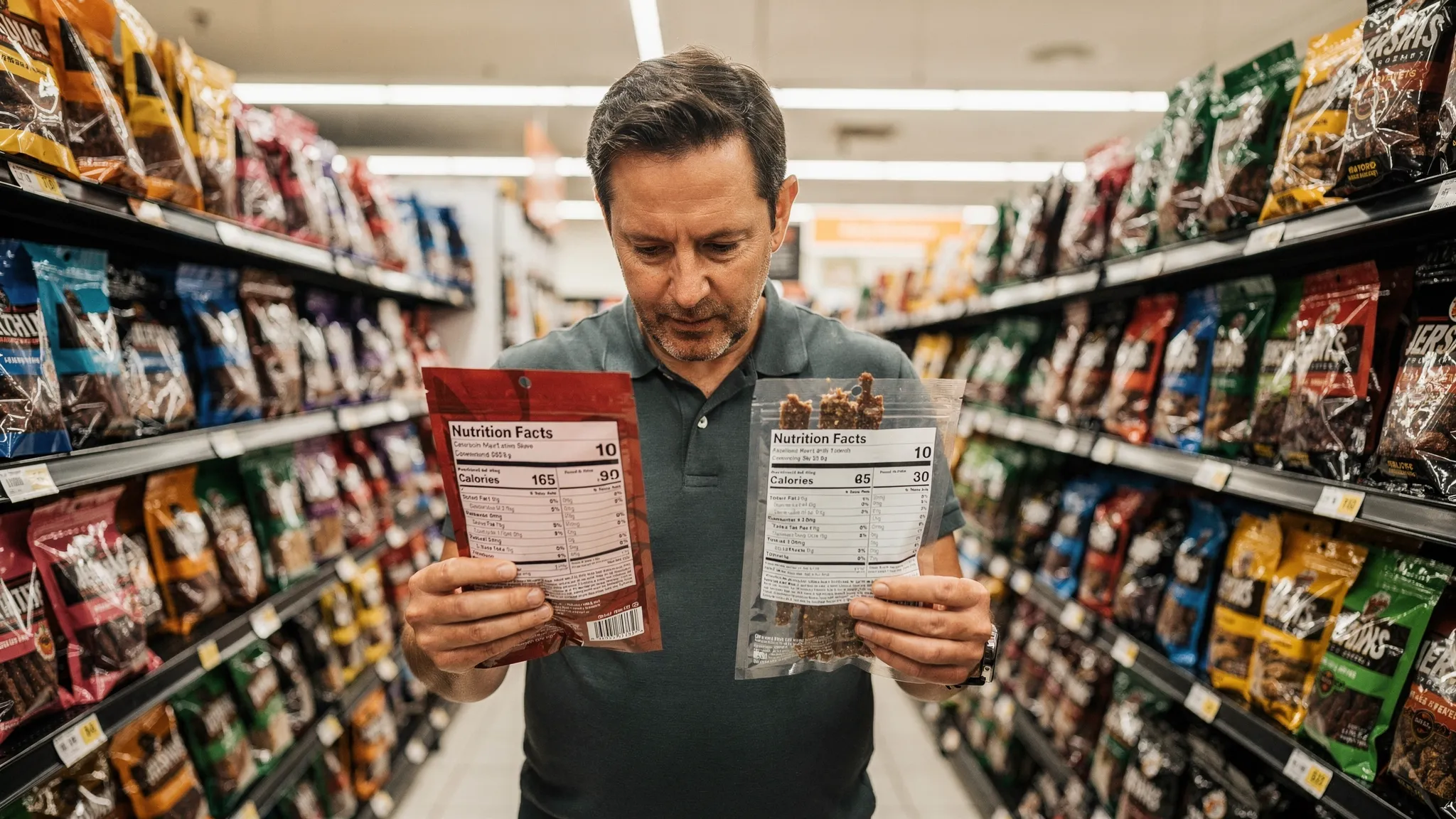
A lot of “healthy jerky brands” look the same at first glance: bold protein claims, outdoorsy packaging, and buzzwords like natural, clean, or keto. The truth is that the healthiest jerky for you depends on your goals (high protein, low sugar, gluten-free, lower sodium, simple ingredients), and the only reliable way to compare is to read the ingredient list and Nutrition Facts like a label detective.
This guide shows you exactly what to look for, what to ignore, and how to compare brands quickly, even when serving sizes and marketing claims don’t line up.
First, define what “healthy” means for your jerky
Jerky is a protein-forward, shelf-stable snack, but it’s also usually salted and seasoned, and sometimes sweetened. So “healthy” is not a single standard.
Before you compare brands, pick your top 2 priorities:
- Higher protein density (more protein per ounce, or per calorie)
- Lower added sugar (or truly sugar-free)
- Lower sodium (or at least sodium that fits your day)
- Diet fit (gluten-free, no soy, no dairy, no artificial sweeteners)
- Simpler ingredient list (fewer additives, flavors, fillers)
If you’re managing a medical condition (for example, hypertension or kidney disease), sodium targets can be very personal, so it’s smart to confirm snack choices with a clinician.
Step 1: Compare the ingredient list (it tells you more than the front label)
Ingredients are listed in descending order by weight. That means the first 3 to 5 ingredients usually tell you what the product is “made of.”
Look for a meat-forward ingredient list
Most jerky should lead with a clear meat ingredient (for example, “beef,” “turkey,” or a specific cut).
What often signals a more “whole-food” style:
- Meat listed first
- Straightforward seasonings (salt, spices, pepper, garlic, vinegar)
- A short list you can understand without Google
What can signal a more processed or “snack-stick-like” approach:
- Starches, fibers, or binders showing up early (more common in sticks than sliced jerky)
- Multiple sweeteners
- Long strings of flavor systems (for example, “natural flavors” plus several flavor enhancers)
Spot added sugars and “stealth sweeteners”
Some jerky styles (like teriyaki) are intentionally sweet. That can still fit a healthy pattern, but you want to know what you’re buying.
Common added sugars in jerky include cane sugar, brown sugar, honey, molasses, and syrups. Also watch for ingredients that function like sugar in the recipe (even if they sound wholesome).
If your goal is low sugar, don’t rely on the word “savory.” Use the label.
For a deeper dive on zero-sugar shopping, see Sugar Free Beef Jerky: Best Options and Tips.
Understand preservatives and curing ingredients
Many meat snacks use curing agents for safety, shelf life, and flavor stability.
- Sodium nitrite (or sodium nitrate) is a common curing agent.
- “Uncured” can still contain nitrite indirectly, often via celery powder or celery juice (which naturally contains nitrate). It is not automatically “preservative-free” in the way many shoppers assume.
For official definitions and label rules, the USDA’s Food Safety and Inspection Service (FSIS) is the reference point for meat labeling and inspection marks: USDA FSIS.
Step 2: Normalize Nutrition Facts (serving sizes make brand comparisons messy)
The #1 mistake people make when comparing healthy jerky brands is comparing “per serving” numbers across brands with different serving sizes.
Convert everything to per ounce
Jerky is commonly served in 1 oz portions, but not always. Some brands use smaller serving sizes to make sodium or sugar look lower.
To compare apples to apples:
- Check the serving size in grams
- Convert grams to ounces (1 oz = 28g)
- Calculate per-ounce sodium, sugar, and protein
This is the same principle used in value shopping, just applied to nutrition. (If you also care about cost efficiency, Beef Jerky for Sale: How to Spot Real Value pairs well with this guide.)
Focus on the few numbers that matter most
For most shoppers, these are the most useful comparisons:
- Protein per ounce (or protein per 100 calories)
- Added sugars (not just total sugar)
- Sodium per ounce
- Calories per ounce
- Saturated fat (especially for sticks)
The FDA explains how the Nutrition Facts label is structured and what “Added Sugars” means here: FDA Nutrition Facts label.

A practical benchmark table for comparing “healthy” jerky
These are not medical targets, just shopper-friendly reference ranges that make it easier to compare brands quickly.
| What you’re comparing | A “better for most people” direction | Why it matters |
|---|---|---|
| Ingredient list length | Shorter and clearer (when possible) | Fewer sweeteners and additives generally makes outcomes easier to predict |
| Protein per ounce | Higher is usually better | Helps you stay fuller and supports performance-focused snacking |
| Added sugars | Lower is usually better | Makes it easier to avoid energy swings and keep macros consistent |
| Sodium per ounce | Lower is usually better (within taste) | Sodium adds up quickly across snacks and meals |
| Calories per ounce | Depends on your goal | Useful if you’re targeting higher satiety or calorie control |
| Allergen fit (soy, wheat, dairy) | “Free-from” only if you need it | Prevents unpleasant surprises for sensitive eaters |
For sodium context, the Dietary Guidelines for Americans recommend limiting sodium to less than 2,300 mg per day for most adults: Dietary Guidelines.
Step 3: Know which front-of-bag claims are meaningful (and which are mostly marketing)
Some label language is regulated and meaningful. Some is vague.
Claims that are usually worth extra attention
- USDA Organic: Organic standards are defined and audited. For the basics, see the USDA organic labeling overview.
- Certified gluten-free: Helpful for people with celiac disease or strong gluten sensitivity. “Gluten-free” is regulated by the FDA for most foods, but certification can add reassurance.
- Nutrition Facts specifics: “0g added sugar,” “Xg protein,” and calorie counts are accountable to labeling rules.
Claims that require you to verify via ingredients and Nutrition Facts
- All natural: Common on meat snacks, but doesn’t automatically mean low sodium, low sugar, or minimally processed.
- High protein: Often true, but compare protein per ounce (and per calorie) to avoid being misled by serving size.
- Keto / low carb: Verify added sugars and total carbs, and consider whether sweeteners agree with you.
Step 4: Watch for the “healthy halo” traps
A brand can look clean and still be a poor fit for your goals.
Common traps:
- Serving-size games: A smaller serving size can make sodium and sugar look lower.
- Sweet flavors with “natural” positioning: Honey, maple, pineapple, and “evaporated cane juice” are still sugar.
- Protein claims that hide calories: Some meat sticks climb in calories and saturated fat faster than sliced jerky.
If you want a beef-jerky-specific version of this section, Healthy Beef Jerky: Labels to Trust, Traps to Avoid goes deeper on common pitfalls.
Step 5: Match the “healthiest” brand to the moment you’re eating it
A smart way to shop is to pick a few “roles” and buy jerky that fits each one.
For everyday high-protein snacking
Choose something you’ll actually enjoy eating consistently. Protein content varies by style and moisture level, so use the label, not assumptions. If you like to quantify it, Beef Jerky Protein: How Much per Serving? shows how to calculate protein per ounce.
For low sugar or sugar-free goals
Look for 0g added sugars and check the ingredient list for sweeteners. Many sugar-free jerkies lean savory and pepper-forward.
For gluten-free needs
Verify “gluten-free” on the label, and still scan ingredients for common sources like soy sauce (unless gluten-free tamari is used). Cross-contact risk varies by facility, which is why certification can matter for some shoppers.
For sodium-conscious shoppers
Jerky is naturally salty, but brands vary a lot. If sodium is a priority, compare mg sodium per ounce and decide what fits your day. Also consider balancing with lower-sodium meals elsewhere.
For “simpler ingredients” shoppers
Look for fewer sweeteners, fewer flavor additives, and a list that reads like a kitchen, not a lab. That said, “natural flavors” is not automatically bad, it’s just less specific.
A fast “compare two brands” method you can use in 60 seconds
When you’re staring at two product pages (or two bags in-store), do this:
Ingredient check
Ask:
- Is meat first?
- How many sweeteners show up?
- Any ingredients I avoid (wheat, soy, dairy, certain sweeteners)?
Nutrition check (normalize to per ounce)
Ask:
- Which has more protein per ounce?
- Which has less added sugar per ounce?
- Which has less sodium per ounce?
Trust check
Ask:
- Is there a USDA inspection mark (for meat products)?
- Is the labeling clear and easy to find online?
If the “health” scores are similar, let taste and texture decide. Consistency matters more than chasing a perfect label you do not enjoy eating.
Frequently Asked Questions
What are the healthiest jerky brands? The healthiest jerky brands are the ones that fit your specific goals. Compare ingredient lists (meat-first, minimal sweeteners) and Nutrition Facts normalized per ounce (protein, added sugar, sodium).
Is beef jerky healthy or unhealthy? Beef jerky can be a convenient, protein-rich snack, but it’s often high in sodium and sometimes contains added sugar. It can fit a balanced diet when you choose intentionally and watch portions.
What ingredients should I avoid in jerky? It depends on your needs, but common watch-outs are multiple added sugars, allergens you react to (wheat/soy/dairy), and anything that pushes sodium or calories beyond your goals.
Does “uncured” jerky mean no nitrates? Not necessarily. “Uncured” jerky often uses celery powder or celery juice as a natural source of nitrate, which can convert to nitrite during processing.
How can I compare sodium in different jerky brands? Do not compare “per serving” unless the serving sizes match. Convert sodium to per ounce so you can compare fairly.
Is sugar-free jerky always better? Not always. Sugar-free can be great for low-sugar goals, but some people dislike certain alternative sweeteners or prefer a small amount of sugar in sweeter flavors. The best choice is the one you can stick with.
Build a smarter “healthy jerky” rotation (without overthinking it)
If you want protein-forward snacks that fit your macros and your taste, it helps to stock a few options and rotate. BULK makes it easy to do that with bulk sizing, bundle deals (up to 20% off), and build-your-own snack box flexibility, including sugar-free and gluten-free options.
Browse BULK and build a mix that matches your goals at BulkBeefJerky.com.