



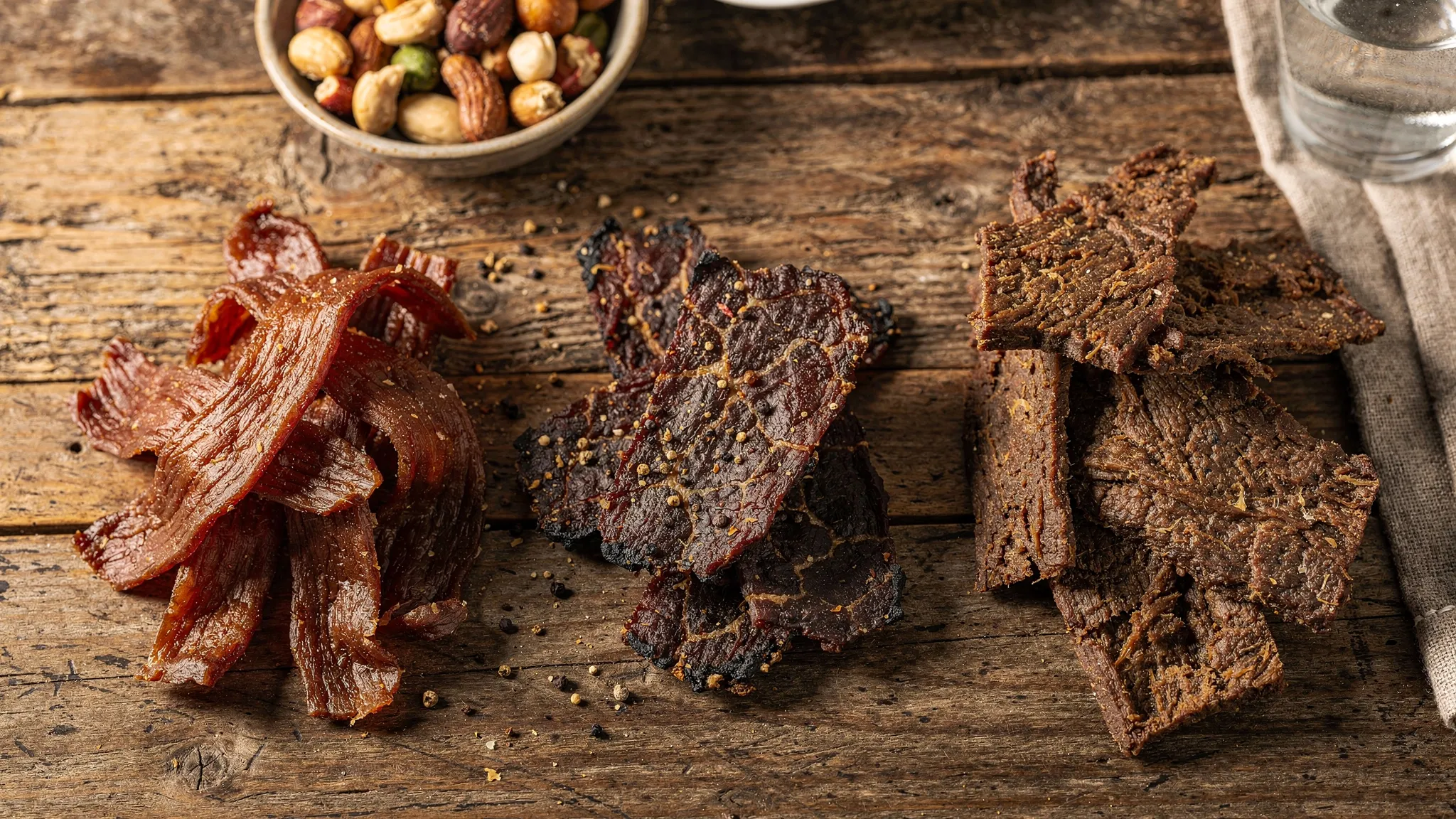
Jerky is one of the rare snacks where “best” really depends on what you want the bite to feel like. Some people want a tender strip that eats like a snackable steak. Others want a smoky, campfire-forward flavor that tastes like it came straight off the pit. And plenty of jerky fans still swear by old-school, rip-and-chew pieces that make you work for it (in the best way).
This guide breaks down the three most-loved jerky styles, what creates each texture and flavor, and how to pick the right one when you’re buying online (especially if you’re stocking up in bulk).
What “jerky style” actually means (and why it changes everything)
When people talk about jerky “styles,” they’re usually describing a mix of:
- Cut and grain direction (across the grain tends to feel more tender, with-the-grain tends to feel more pull-apart)
- Slice thickness (thin strips vs thick slabs vs chunk pieces)
- Drying level (soft and pliable vs dry and chewy)
- Seasoning approach (marinade-heavy, pepper-forward, sweet-savory, minimal)
- Smoke influence (no smoke, light smoke, or full-on smokehouse character)
If you’ve ever bought a bag expecting soft bites and ended up with a jaw workout (or the opposite), it usually comes down to those variables.

Style 1: Tender jerky (soft bite, big crowd-pleaser)
Tender jerky is the gateway style for a lot of people, and for good reason. It’s easier to eat, often more uniformly seasoned, and generally friendlier if you’re snacking at your desk, in the car, or sharing with a group.
What tender jerky tastes and feels like
- Texture: Softer, more pliable, less “pull” per bite
- Chew: Faster breakdown, less time working the fibers
- Flavor: Often leans savory-sweet or savory-forward, because the softer chew releases flavor quickly
Tender doesn’t mean “low quality.” It usually means the jerky was made to be more immediately snackable, rather than intentionally dry.
What typically creates a tender style
Without getting overly technical, tender jerky usually comes from a combination of:
- Slicing that favors tenderness (often across the grain)
- A drying process that leaves a bit more moisture (still jerky, just less dry)
- Marinades that emphasize flavor penetration
If you want a deeper dive into what drives chewiness (including rip-and-chew), Bulk Beef Jerky has a helpful companion read: Beef Jerky Chew: Tender, Tough, or Rip n Chew?
Who tender jerky is best for
Tender jerky is usually the “best jerky style” choice if you:
- Are buying jerky for the first time (or buying for a mixed crowd)
- Want a high-protein snack that’s easy to eat quickly
- Prefer less aggressive chew, especially on road trips or at work
Online shopping cues to look for
Product pages often hint at tenderness with words like tender, soft, steak strip, thin-sliced, or easy chew. If the description emphasizes “old-school” or “rip and chew,” that’s usually the opposite end of the spectrum.
Style 2: Smoky jerky (pit-like flavor, deeper savoriness)
If tender jerky is about bite, smoky jerky is about aroma and depth. Smoke adds a “rounded” savory character that can make even simple seasoning taste more complex.
What smoky jerky tastes and feels like
- Texture: Can be tender or chewy, smoke is a flavor layer, not a texture by itself
- Flavor: Wood-driven notes like bacon-like savoriness, sweet toastiness, or a bold campfire edge
- Finish: Often lingers longer than non-smoked styles
Natural smoke vs “smoke flavor”: what to know
Some products are smoked with real wood (or in a smokehouse), and others use smoke flavoring. Both can taste good, but they’re different experiences.
If you’re choosing specifically for smoke character, the best move is to read the product description and ingredients, and look for whether the brand explains their smoking approach.
Bulk Beef Jerky has a solid explainer on why smoking method matters here: Capturing Meat’s Full Flavor: The Importance of Proper Smoking
Common woods and what they signal
Smoke flavor can vary a lot depending on the wood. Here’s a practical cheat sheet:
| Wood | Typical flavor profile | Best if you like |
|---|---|---|
| Hickory | Strong, savory, “bacon-like” | Bold smoke that doesn’t disappear under seasoning |
| Mesquite | Very intense, earthy | Texas BBQ vibes and big punch |
| Oak | Medium, balanced | Classic smoke that works with pepper or simple salt |
| Apple | Mild, slightly sweet | A gentler smoke that stays snackable |
| Cherry | Mild-medium, subtly sweet | A smoother smoke with a touch of richness |
Who smoky jerky is best for
Smoky jerky is a great pick if you:
- Love BBQ flavors and want that “smokehouse” impression
- Prefer savory depth over sweetness
- Want a jerky that pairs well with salty sides (nuts, cheese) or something crisp (pickles)
Style 3: Old-school jerky (dry, tough, rip-and-chew tradition)
Old-school jerky is the style people mean when they say, “I want jerky that tastes like jerky.” It’s more rugged, usually drier, and built for that slow, satisfying chew.
What old-school jerky tastes and feels like
- Texture: Drier, firmer pieces (often chunkier)
- Chew: Longer, more resistance, more “rip”
- Flavor: Often simpler and meat-forward, because you’re chewing longer and tasting it longer
This is the style many people associate with Texas-style jerky, classic road-trip jerky, and the kind of jerky you eat on a hike where you actually want it to last.
What typically creates an old-school style
Old-school chew usually comes from:
- Thicker cuts or chunk pieces
- Drying longer (less moisture left in the finished bite)
- Slicing choices that preserve that fibrous pull
If you want “old-school,” don’t fight it. That chew is the point.
How to enjoy old-school jerky (without feeling like you’re doing homework)
A few pro moves that make rip-and-chew more enjoyable:
- Warm it slightly (even just in your pocket for a bit) to soften the fats and aroma
- Tear smaller bites to reduce jaw fatigue
- Pair with water (or any drink) and let the chew slow you down
Who old-school jerky is best for
Old-school jerky is usually your best match if you:
- Want the most classic “jerky experience”
- Prefer less sweetness and more meat-first flavor
- Like a snack that lasts (hunting, hiking, long drives, shop days)
Quick picker: which jerky style should you buy?
If you’re deciding fast, use this:
- Choose tender jerky if you want easy eating, quick snacking, and broad crowd appeal.
- Choose smoky jerky if you want depth, BBQ character, and that smokehouse aroma.
- Choose old-school jerky if you want a dry, classic chew and a more traditional experience.
And if you’re buying for a group, the safest “best jerky styles” spread is one of each. It covers almost everyone.
Don’t forget dietary preferences (they can change the “best” style)
A lot of people search for the best jerky and really mean: “best jerky I can eat every day without feeling wrecked.” Two common considerations:
Sugar-free and no-added-sugar preferences
Many tender, teriyaki-style, or glaze-forward jerkies lean sweet. If you’re trying to avoid that, focus on savory styles (pepper, original, smoke-forward) or explicitly sugar-free options.
Bulk has a detailed guide that helps you shop this category without getting tricked by serving sizes or wording: Sugar Free Beef Jerky: Best Options and Tips
Gluten-free needs
Jerky can be gluten-free, but some marinades (especially soy sauce based) can be a hidden issue unless gluten-free alternatives are used. If you’re buying for someone with celiac or high sensitivity, treat the label and product page as the source of truth.
Buying in bulk: how to stock up on the right style (without regret)
When you buy bulk jerky online, the upside is value and convenience. The downside is getting “stuck” with a style you don’t love.
A low-risk bulk strategy that works
- Start with a variety mix (tender, smoky, old-school) so you learn your preference quickly.
- Then scale into bulk sizes of the styles you actually finish first.
- Keep a few “wild cards” in rotation (like smoky or extra peppery) so you don’t burn out.
Bulk Beef Jerky has a practical playbook for this, including how to think about per-ounce cost and storage: Beef Jerky Bulk: Smart Ways to Buy More for Less
Storage note (especially for big orders)
Follow the package instructions first. For general food-safety guidance on jerky handling, the USDA FSIS overview is a good reference: Jerky and Food Safety (USDA FSIS)
Frequently Asked Questions
What is the best jerky style for beginners? Tender jerky is usually the easiest starting point because it’s softer, quicker to chew, and tends to be broadly appealing.
Is smoky jerky always tougher? No. Smoke is primarily a flavor layer. Smoky jerky can be tender or old-school chewy depending on how it’s sliced and dried.
What does “old-school” or “Texas-style” jerky mean? It typically refers to a drier, firmer jerky with a longer chew and a more traditional, meat-forward profile (often less sweet).
How can I tell if jerky will be tender when buying online? Look for texture cues in the description (tender, soft, easy chew) and check related guides like Bulk’s chew explainer to understand how slice and drying affect bite.
What’s the safest way to buy jerky in bulk if I’m not sure what I like? Start with a variety assortment or customizable bundle, then reorder larger sizes only after you know which styles you finish fastest.
Find your best jerky style (and stock up the smart way)
If you’re chasing the best jerky styles for your taste, the fastest shortcut is trying a mix: one tender option, one smoky option, and one old-school rip-and-chew option, then doubling down on your winner.
Explore Bulk Beef Jerky’s bulk sizes, bundle deals, and customizable options at BulkBeefJerky.com. If you’re building a stash for work, training, road trips, or gifting, buying in bulk (and mixing styles) is the easiest way to keep your snack game strong without getting bored.