



WEEEKLY MOTIVATION
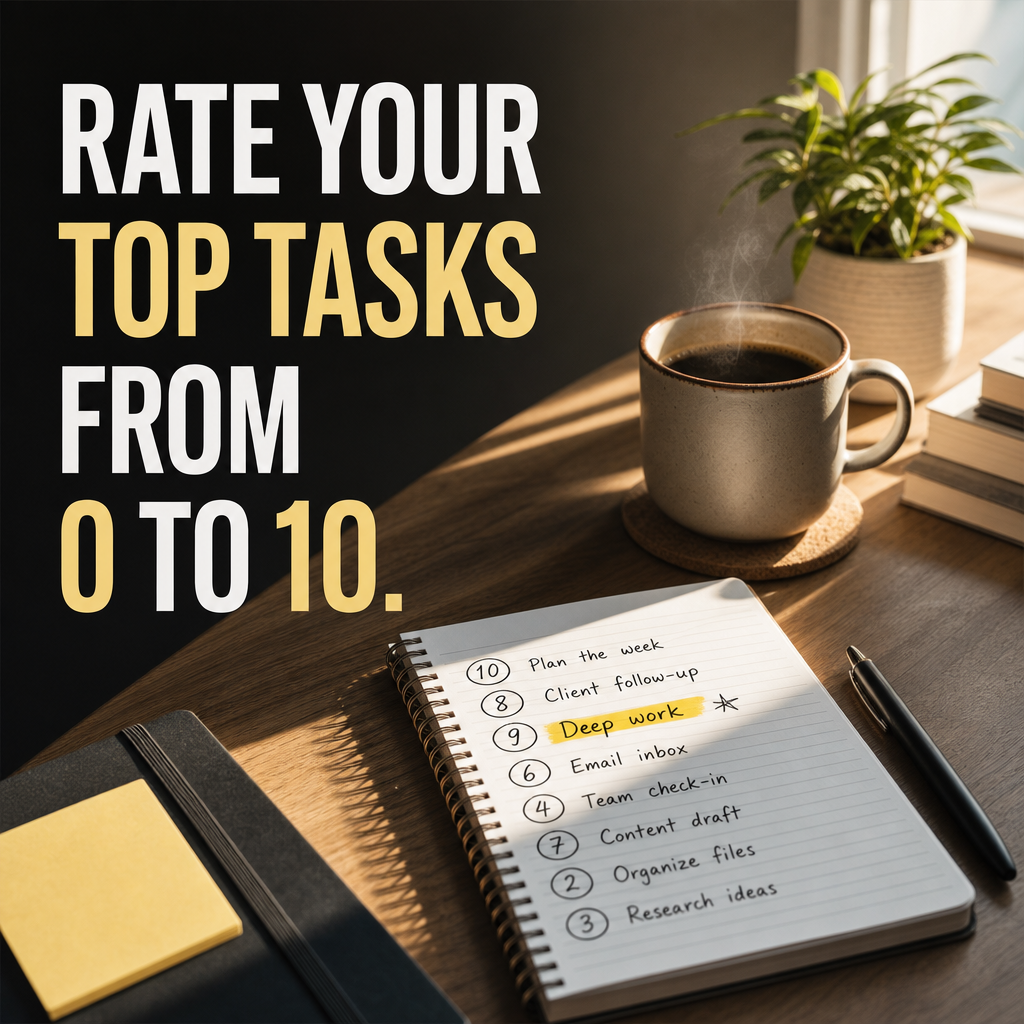
RATE YOUR TOP TASKS FROM 0 TO 10.
Glance at your to-do list and rate each item by its likely impact today, where 0 is no impact and 10 is transformative.
Pick Your 10—Work With Impact, Not Overload
Have you ever reached the end of an exhausting day and wondered if anything you did really mattered? Each ping on your phone or new message in your inbox felt important in the moment—but looking back, your biggest priorities never made it off the ground. This isn’t about laziness or a lack of ambition. Most of us genuinely want to do meaningful work—at home, at work, or inside our own growth. The challenge is that urgency always shouts louder than importance. The result is task overload, dwindling focus, and sometimes the feeling that we’re simply treading water. What if there was a fast, concrete way to give your effort a north star right now? That’s where the 0–10 Rule comes in. It’s not a fancy app or a personal development hack—just a deliberately simple habit: rating your priorities by their real impact, in the moment. Recent research suggests this one tweak can transform the rhythm of your days—not by making you do more, but by helping you focus on what matters most.
A Surprising Truth: Small Shifts Make Big Changes
We tend to think that big progress requires overhauling our whole approach. But the latest research hints at the opposite. In a 2026 randomized experiment, everyday professionals learned to rate their main tasks, every morning, by perceived impact—just a quick 0–10 scale. Tasks that might actually shift the dial (for themselves, their team, or a key life goal) got higher scores. Everything else—a routine email, a meeting that didn’t really need them—might score much lower.
Over twelve weeks, these simple daily ratings led to more accomplished goals and a remarkable drop in burnout. The researchers didn’t find magic, just the power of a focused mind. Small moves, like rating a to-do list, can quietly shape your entire workday.
Hypothetical Example: Alex’s List Gets Sharper
Let’s imagine Alex, who works at a midsized company and often leaves work craving a deeper sense of accomplishment. On Monday, Alex lists 9 things to do: respond to emails, update a spreadsheet, finish slides, call a client, prep for tomorrow’s meeting, and several more small items.
Before jumping in, Alex pauses and rates each task for impact. ‘Finish client slides’ scores a 9—it’s both due soon and will shape tomorrow’s meeting. ‘Prep for meeting’ is an 8. Daily email catchup drops to a 3—it’s necessary, but not life-changing. Alex tackles the slides and prep work first. Even though the other small tasks are still on the list, there’s a north star for the day. When coworkers swing by or the inbox fills up again, Alex is less likely to be derailed. By lunch, the big work is done. The rest can fit around it or wait for another day, with a little less guilt.
Why This Works: Impact Trumps Activity
Our brains are wired to answer what’s loudest in the moment. Often, that’s not the thing that will move us forward. By rating each task, even roughly, you nudge your focus toward intention instead of reactivity. The 0–10 scale isn’t about perfection. Some days, your ‘10’ might be a five-minute phone call that makes a real difference; other days, it’s a stretch project that needs a longer block.
Researchers found that this small act of prioritization helped professionals spend more time in focused work, and less on busywork or low-value tasks. Notably, the same study showed well-being improved too—less burnout, more satisfaction—when people could see their efforts leading somewhere meaningful. That’s not because they did everything, but because their best attention stayed anchored to impact.
Try It Today: Two Minutes to Tune Your Focus
Here’s the practice: Look at your to-do list—paper, app, or just a mental note. For each item, quickly rate it 0 to 10 by how much positive difference it could make today. Which items really matter for your goals, your project’s progress, or your peace of mind?
Now choose to start with your highest-rated task. The rest can wait or be grouped for when your focus is lower. No need for the perfect list—just a minute of clear-eyed decision can make your day less crowded, and your accomplishments more real.